Course Description
Ensure Software Quality, Reliability & Release Confidence
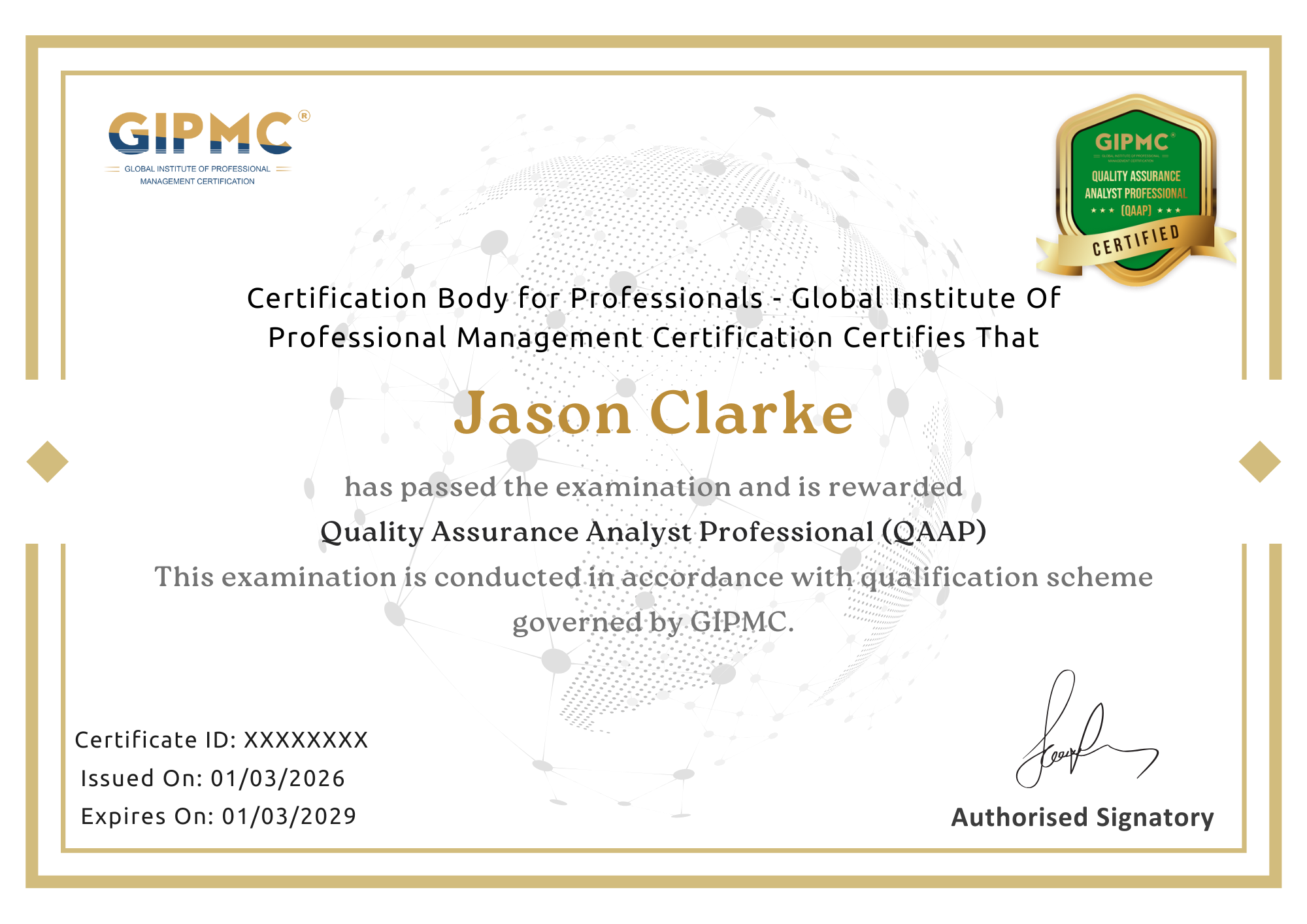
The Quality Assurance Analyst Professional (QAAP) certification is a professional credential designed to develop, validate, and recognize end-to-end software quality assurance competencies across modern development environments.
This certification emphasizes quality planning, testing techniques, defect management, process compliance, and continuous improvement, preparing professionals to ensure software products meet functional, performance, and reliability expectations.
QAAP goes beyond test execution. It equips professionals with the ability to analyze requirements, design effective test strategies, collaborate with development teams, and safeguard product quality throughout the software lifecycle.
Why Quality Assurance Analyst Professional (QAAP) from GIPMC?
The QAAP
certification is methodology-flexible and tool-agnostic, enabling certified professionals to operate effectively across different development models, tools, and organizational environments.
Key Advantages
- Globally relevant quality assurance competency framework
- Balanced coverage of manual, automated, and process-driven QA practices
- Practical, scenario-based learning aligned with real software projects
- Applicable across industries including IT, finance, healthcare, telecom, e-commerce, and enterprise systems
- Career-oriented certification focused on quality ownership and accountability
QAAP supports professionals at associate to professional QA analyst levels.
Market Relevance
Organizations increasingly recognize quality assurance as a strategic function that directly impacts customer satisfaction, cost control, and brand trust.
- 30–45% reduction in post-release defects through structured QA practices
- 70%+ hiring preference for candidates with verified QA and testing expertise
- 40% improvement in release stability with systematic quality validation
- 2× faster defect resolution cycles with trained QA analysts
(Based on aggregated software quality benchmarks, hiring trends, and delivery performance studies.)
These metrics demonstrate why professional QA skills remain critical to successful software delivery.
Who Should Pursue QAAP? (Target Audience)
The Quality Assurance Analyst Professional certification is suitable for individuals involved in software testing and quality processes, including:
- Quality Assurance Analysts and Test Engineers
- Software Testers and Validation Specialists
- Manual and Automation Testing Professionals
- Business and System Analysts supporting testing
- Application Support and Release Teams
- Graduates entering QA and testing roles
- Professionals transitioning into quality-focused careers
QAAP establishes a common quality framework across development and delivery teams.
Detailed Learning Outcomes
By earning the Quality Assurance Analyst Professional (QAAP), candidates demonstrate competencies consistent with a CAPM project management certification, including the ability to:
1. Foundations of Software Quality Assurance
- Role of QA in software development
- Quality concepts, principles, and objectives
- QA vs. testing responsibilities
2. Software Development Lifecycle & QA Integration
- QA activities across SDLC models
- Early quality involvement
- Risk-based quality planning
3. Requirements Analysis & Test Planning
- Understanding and validating requirements
- Test strategy and test plan creation
- Scope, assumptions, and constraints
4. Test Design Techniques
- Test case design methods
- Positive, negative, and boundary testing
- Coverage and traceability
5. Manual Testing Practices
- Functional and non-functional testing
- Exploratory and regression testing
- Test execution and result analysis
6. Defect Management & Reporting
- Defect lifecycle and classification
- Writing effective defect reports
- Collaboration with development teams
7. Test Data & Test Environment Management
- Preparing and managing test data
- Environment setup and validation
- Handling dependencies and constraints
8. Automation Testing Fundamentals
- Purpose and scope of test automation
- Automation frameworks and tools overview
- Deciding what and when to automate
9. Performance, Security & Usability Testing
- Basics of performance and load testing
- Security and vulnerability awareness
- Usability and user experience validation
10. Quality Metrics & Reporting
- Measuring test effectiveness
- Defect trends and quality indicators
- Communicating quality status
11. Process Compliance & Quality Standards
- QA processes and best practices
- Standards, audits, and documentation
- Continuous improvement approaches
12. Collaboration, Communication & Risk Management
- Working with cross-functional teams
- Managing testing risks and issues
- Stakeholder communication
13. QA Capstone & Professional Review
- End-to-end quality assurance scenario
- Test strategy execution and review
- Final quality assessment and improvement plan
Professional and Career Benefits
QAAP-certified professionals are recognized for their ability to:
- Ensure software quality across the lifecycle
- Design and execute effective testing strategies
- Identify and manage defects efficiently
- Improve release reliability and customer confidence
- Contribute to continuous quality improvement
Career roles supported by QAAP include:
- Quality Assurance Analyst
- Software Test Engineer
- QA Automation Support Specialist
- Test Lead (Entry–Mid Level)
- Application Quality Analyst
- Software Validation Professional
Certification Validity & Renewal
The Quality Assurance Analyst Professional (QAAP) certification is valid for three (3) years from the date of certification award.
Renewal Purpose
- Maintain alignment with evolving QA tools and practices
- Reinforce quality standards and testing methodologies
- Protect the long-term professional credibility of the certification
Renewal Process Includes
- Completion of defined professional development or quality knowledge refresh activities
- Successful renewal assessment or verification, as applicable
- Submission of renewal application prior to certification expiry
Timely renewal allows professionals to retain active certification status without interruption.