Course Description
Engineer Reliable Software Through Structured Testing & Quality Discipline
The Software Testing Engineering Professional (STEP) certification is a professional credential designed to develop, validate, and recognize end-to-end software testing engineering capabilities across modern development environments.
This certification emphasizes testing fundamentals, engineering discipline, test design, execution rigor, defect prevention, and collaboration with development teams, preparing professionals to ensure software functions correctly, consistently, and reliably.
STEP bridges traditional testing roles and modern quality engineering. It equips professionals with the ability to apply engineering thinking to testing, design robust test strategies, validate functional requirements, and contribute meaningfully to software delivery quality.
Why Software Testing Engineering Professional (STEP) from GIPMC?
The STEP certification is technology-neutral and methodology-flexible, enabling professionals to apply testing engineering principles across agile, DevOps, and hybrid delivery models.
Key Advantages
- Globally relevant software testing engineering framework
- Balanced coverage of functional testing, engineering practices, and process discipline
- Practical, scenario-driven learning aligned with real project environments
- Applicable across web, mobile, enterprise, cloud, and API-based applications
- Career-oriented certification focused on reliability, rigor, and delivery confidence
STEP supports professionals operating at professional and senior testing roles.
Market Relevance
Organizations increasingly require testing professionals who apply engineering rigor rather than ad-hoc testing practices.
- 40–60% improvement in defect detection effectiveness through structured testing engineering
- 70%+ hiring preference for professionals with formal software testing engineering credentials
- 45–55% reduction in production defects with disciplined test design and execution
- 2× improvement in release confidence compared to unstructured testing approaches
(Based on aggregated QA engineering practices, software quality benchmarks, and delivery performance studies.)
These indicators highlight why software testing engineering is a critical professional capability.
Who Should Pursue STEP? (Target Audience)
The Software Testing Engineering Professional certification is designed for professionals involved in software testing and quality validation, including:
- Software Test Engineers and QA Professionals
- Functional and Manual Testers seeking engineering depth
- Automation Engineers strengthening testing foundations
- QA Analysts and Test Leads
- Software Engineers with testing responsibilities
- Professionals transitioning into structured testing roles
STEP establishes a common engineering-based testing language across quality and development teams.
Detailed Learning Outcomes
By earning the Software Testing Engineering Professional (STEP), candidates demonstrate competencies consistent with a CAPM project management certification, including the ability to:
1. Foundations of Software Testing Engineering
- Role of testing in software quality
- Testing as an engineering discipline
- Professional responsibilities and ethics
2. Software Development Lifecycle & Testing Integration
- Testing across SDLC models
- Early testing and quality involvement
- Collaboration with development teams
3. Requirements Analysis & Testability
- Understanding and validating requirements
- Acceptance criteria and testability analysis
- Traceability fundamentals
4. Test Strategy & Engineering Planning
- Designing effective test strategies
- Scope, priorities, and risk-based testing
- Estimation and resource planning
5. Functional Test Design Techniques
- Test case design methods
- Boundary, negative, and exploratory testing
- Coverage and traceability
6. Test Execution & Validation Practices
- Structured test execution
- Evidence-based validation
- Managing test results
7. Defect Identification & Management
- Defect lifecycle and classification
- Root cause awareness
- Collaboration for resolution
8. Regression Testing & Test Maintenance
- Regression testing strategies
- Maintaining test assets
- Preventing defect reoccurrence
9. Introduction to Test Automation Engineering
- Automation concepts and value
- When and what to automate
- Supporting scalable testing
10. API, Integration & System Testing
- Testing system interactions
- Data validation and workflows
- End-to-end test scenarios
11. Test Metrics, Reporting & Quality Analysis
- Measuring test effectiveness
- Reporting quality status
- Data-driven improvement
12. Standards, Governance & Professional Conduct
- Testing standards and best practices
- Documentation and audit readiness
- Ethical testing responsibilities
13. Software Testing Engineering Capstone & Review
- End-to-end testing engineering scenario
- Strategy execution and assessment
- Final professional readiness evaluation
Professional and Career Benefits
STEP-certified professionals are recognized for their ability to:
- Apply engineering discipline to software testing
- Design and execute effective functional test strategies
- Improve defect detection and release reliability
- Collaborate effectively with development teams
- Strengthen organizational quality practices
Career roles supported by STEP include:
- Software Testing Engineering Professional
- Software Test Engineer
- QA Engineer
- Functional Testing Specialist
- Test Lead (Professional Level)
- Quality Assurance Professional
Certification Validity & Renewal
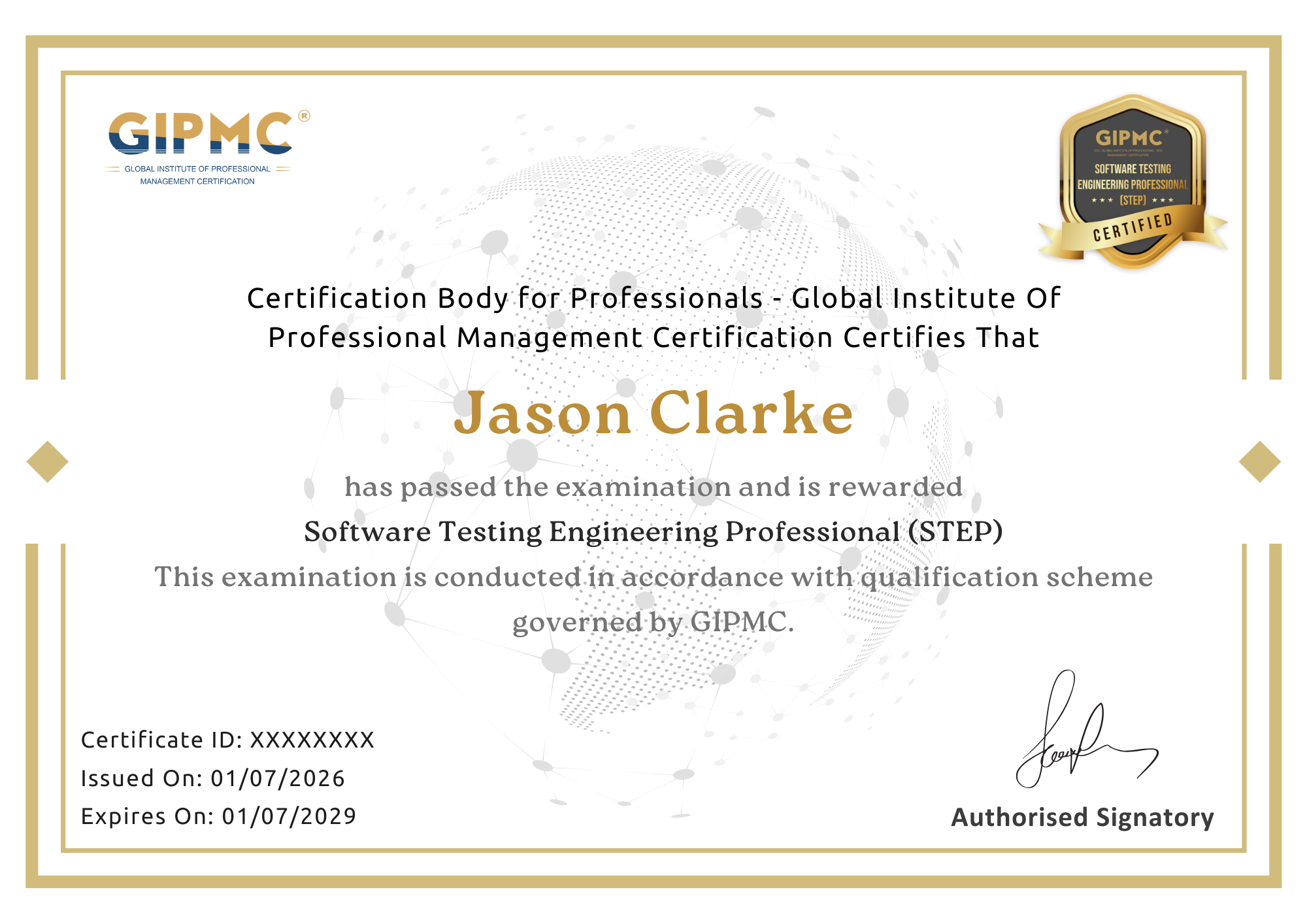
The Software Testing Engineering Professional (STEP) certification is valid for three (3) years from the date of certification award.
Renewal Purpose
- Maintain alignment with evolving testing practices and delivery models
- Reinforce engineering discipline and professional testing standards
- Protect the long-term professional credibility of the certification
Renewal Process Includes
- Completion of defined professional development or testing knowledge refresh activities
- Successful renewal assessment or verification, as applicable
- Submission of renewal application prior to certification expiry
Timely renewal allows professionals to retain active certification status without interruption.