Course Description
The Cloud Engineering Professional (CEP) certification is a comprehensive credential designed to validate expertise in cloud infrastructure design, deployment, automation, and operations. It equips professionals with the technical, architectural, and operational capabilities required to build, manage, and optimize secure, scalable, and resilient cloud environments.
CEP focuses on practical cloud engineering skills, covering infrastructure, platforms, networking, security, and operations across public, private, and hybrid cloud models.
Why Cloud Engineering Professional (CEP) from GIPMC?
The CEP certification is built to be cloud-provider-neutral and tool-agnostic, allowing professionals to apply cloud engineering principles across multiple platforms without reliance on a specific vendor ecosystem.
Key Advantages
- Globally relevant cloud engineering competency framework
- Balanced coverage of architecture, operations, and automation
- Practical, scenario-driven learning approach
- Alignment with DevOps, Site Reliability, and cloud-native practices
- Career-focused credential applicable across industries
CEP supports professionals at various stages of their cloud engineering journey, from infrastructure specialists to platform engineers.
Market Relevance
- Cloud adoption continues to accelerate across industries
- Organizations seek engineers who can design reliable and cost-efficient cloud systems
- Automation-driven cloud operations reduce downtime and operational risk
- Certified cloud engineers demonstrate faster deployment and improved stability
(Based on aggregated cloud adoption and infrastructure transformation trends.)
As cloud platforms become core to digital operations, skilled cloud engineers are in high demand.
Who Should Pursue CEP? (Target Audience)
The Cloud Engineering Professional (CEP) certification is suitable for professionals involved in cloud infrastructure and operations, including:
- Cloud Engineers and Infrastructure Engineers
- DevOps and Site Reliability Engineers
- Systems and Network Engineers
- Platform and Reliability Engineers
- IT Operations Professionals
- Application Engineers working with cloud platforms
- Professionals transitioning to cloud engineering roles
CEP provides a structured framework for mastering modern cloud engineering practices.
Detailed Learning Outcomes
By earning the Cloud Engineering Professional (CEP), candidates demonstrate competencies consistent with a CAPM project management certification, including the ability to:
1. Cloud Computing Foundations
- Cloud service and deployment models
- Shared responsibility concepts
- Cloud economics and value drivers
2. Cloud Architecture & Design Principles
- Scalable and resilient architecture patterns
- High availability and fault tolerance
- Designing for performance and cost optimization
3. Infrastructure as a Service (IaaS)
- Compute, storage, and networking fundamentals
- Virtual machines and cloud storage options
- Infrastructure provisioning considerations
4. Platform & Cloud-Native Services
- Platform services and managed offerings
- Containers and orchestration concepts
- Serverless computing fundamentals
5. Cloud Networking
- Virtual networks and connectivity
- Load balancing and traffic management
- Hybrid and multi-cloud networking
6. Identity, Security & Access Management
- Identity and access control principles
- Securing cloud resources
- Compliance and security best practices
7. Infrastructure Automation & IaC
- Infrastructure as Code concepts
- Configuration management and orchestration
- Repeatable and version-controlled deployments
8. Monitoring, Logging & Observability
- Monitoring cloud resources and applications
- Logging, metrics, and alerting
- Operational visibility and incident response
9. Reliability, Backup & Disaster Recovery
- Backup strategies and data protection
- Disaster recovery planning
- Business continuity considerations
10. Cloud Operations & Cost Management
- Day-to-day cloud operations
- Cost tracking and optimization
- Resource governance and usage control
11. DevOps & Continuous Delivery Integration
- CI/CD concepts in cloud environments
- Collaboration between development and operations
- Supporting rapid and reliable deployments
12. Performance Optimization & Scaling
- Auto-scaling and capacity planning
- Performance tuning strategies
- Load testing and optimization
13. Governance, Risk & Cloud Compliance
- Cloud governance frameworks
- Risk management and policy enforcement
- Audit and compliance readiness
Professional and Career Benefits
CEP-certified professionals are recognized for their ability to:
- Design and operate scalable cloud environments
- Automate infrastructure deployment and management
- Ensure security, reliability, and performance
- Support cloud-native and DevOps initiatives
- Reduce operational risk and infrastructure cost
Career Opportunities Include:
- Cloud Engineer
- DevOps or Site Reliability Engineer
- Infrastructure or Platform Engineer
- Cloud Operations Manager
- Systems Architect
- Cloud Solutions Consultant
Certification Validity & Renewal
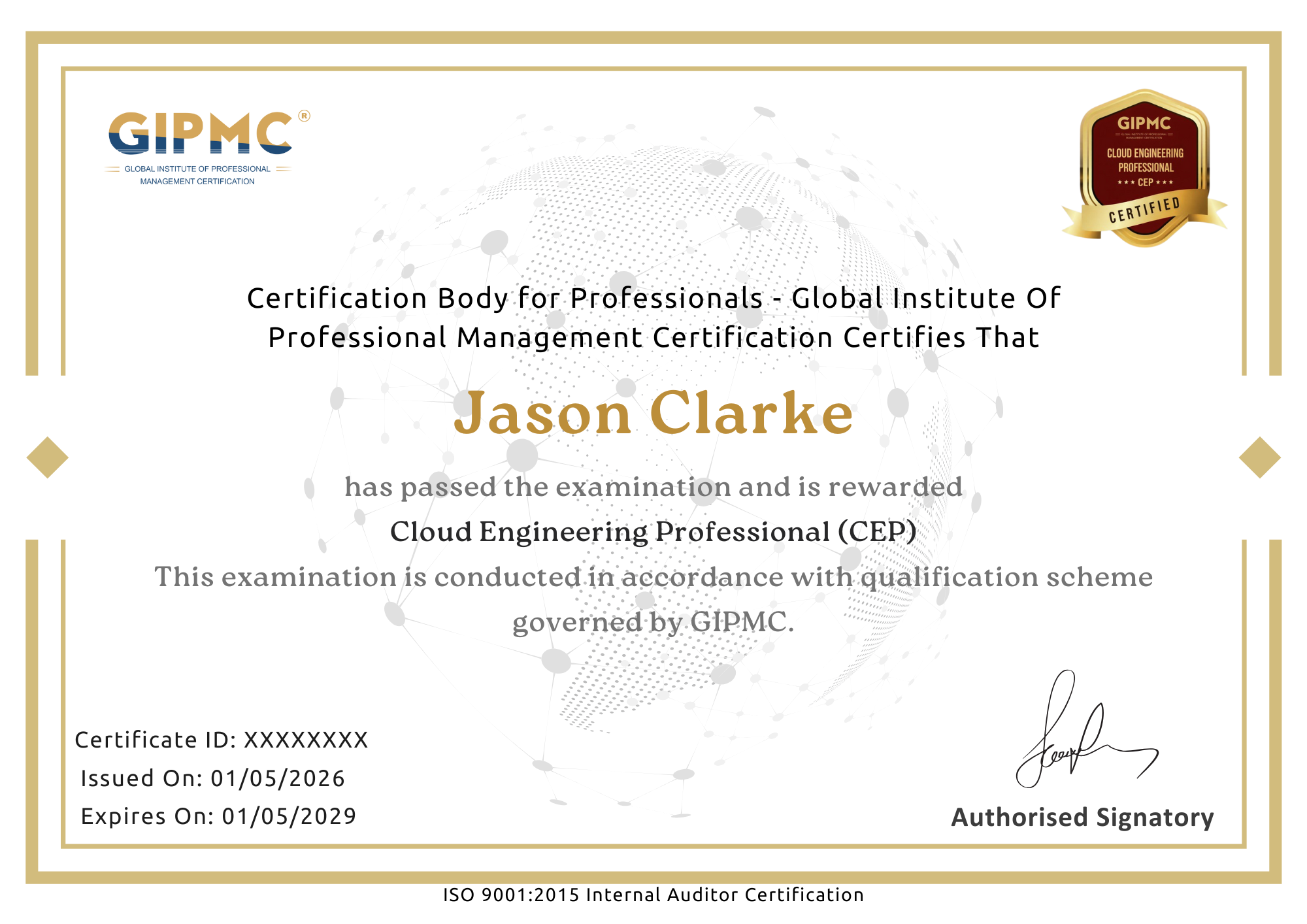
The Cloud Engineering Professional (CEP) certification is valid for three (3) years from the date of certification award.
Renewal Objectives
- Maintain relevance in evolving cloud technologies
- Stay aligned with modern engineering practices
- Preserve the long-term value of the certification
Renewal Requirements Include:
- Completion of defined continuing learning or professional development activities
- Successful renewal assessment or competency validation, as applicable
- Submission of renewal application before certification expiry
Timely renewal allows professionals to retain active certification status without interruption.