Course Description
The Linux Administration Specialist (LAS) certification is a professional credential designed to develop, validate, and recognize practical skills in administering, configuring, securing, and maintaining Linux operating systems in enterprise and production environments.
This certification prepares professionals to manage Linux-based systems that power servers, cloud platforms, applications, and critical infrastructure. It emphasizes hands-on system administration, command-line proficiency, service management, security practices, and operational reliability.
LAS goes beyond basic Linux familiarity by equipping professionals with the real-world administrative competence required to operate Linux systems efficiently, securely, and in alignment with organizational requirements.
Why Linux Administration Specialist (LAS) from GIPMC?
Linux is the foundation of modern IT infrastructure, cloud computing, DevOps platforms, and enterprise systems. LAS is vendor-neutral, distribution-agnostic, and role-focused, enabling professionals to apply skills across different Linux environments and organizational contexts.
Key Advantages
- Vendor-neutral and distribution-independent Linux credential
- Strong focus on practical system administration skills
- Emphasis on command-line proficiency and operational reliability
- Applicable to on-premises, cloud, and hybrid environments
- Career-oriented certification with real-world applicability
LAS is designed for professionals building or strengthening careers in Linux system administration and operations.
Market Relevance
Linux continues to dominate server, cloud, and infrastructure environments, driving sustained demand for skilled Linux administrators.
- 60–80% of enterprise servers globally run on Linux-based operating systems
- 65–85% employer preference for IT infrastructure roles requiring Linux administration skills
- 35–55% improvement in system stability and uptime reported by organizations with trained Linux administrators
- 2x higher employability and role mobility for professionals with validated Linux administration credentials
(Based on aggregated global infrastructure, cloud computing, and IT operations workforce trends.)
These figures demonstrate why Linux administration expertise remains a core and in-demand technical skill.
Who Should Pursue Linux Administration Specialist (LAS)? (Target Audience)
The Linux Administration Specialist (LAS) certification is suitable for professionals involved in managing or supporting Linux systems, including:
- Linux and System Administrators
- IT Infrastructure and Operations Professionals
- Cloud and Platform Support Engineers
- DevOps and SRE Support Team Members
- Network and Server Administrators
- Technical Support and Operations Engineers
- IT professionals transitioning into Linux-based roles
Across industries, LAS provides a solid technical foundation for Linux system operations.
Detailed Learning Outcomes
By earning the Linux Administration Specialist (LAS), candidates demonstrate competencies consistent with a CAPM project management certification, including the ability to:
1. Linux Operating System Fundamentals
- Linux architecture and components
- Understanding distributions and file systems
- Role of Linux in modern IT environments
2. Command-Line Proficiency
- Navigating the Linux shell
- Managing files and directories
- Using core command-line utilities
3. User and Group Management
- Creating and managing users and groups
- Managing permissions and ownership
- Understanding access control concepts
4. File System and Storage Management
- File system structure and hierarchy
- Disk partitioning and mounting
- Managing storage usage
5. Package and Software Management
- Installing, updating, and removing software
- Managing repositories and packages
- Maintaining system updates
6. Process and Service Management
- Managing running processes
- Starting, stopping, and monitoring services
- Understanding system startup and scheduling
7. Networking Fundamentals in Linux
- Network configuration and troubleshooting
- Managing interfaces and connectivity
- Basic firewall and network security concepts
8. System Monitoring and Performance
- Monitoring CPU, memory, disk, and processes
- Identifying performance issues
- Using monitoring and logging tools
9. Security and System Hardening
- Basic system security practices
- Managing permissions and access
- Applying security updates and controls
10. Backup and Recovery Concepts
- Backup strategies and tools
- Restoring files and systems
- Ensuring data availability
11. Automation and Scripting Basics
- Introduction to shell scripting
- Automating routine administrative tasks
- Improving efficiency and consistency
12. Troubleshooting and Incident Handling
- Diagnosing system issues
- Log analysis and fault isolation
- Supporting operational incident resolution
13. Professional Linux Administration Practices
- Documentation and change awareness
- Working within operational procedures
- Preparing for advanced Linux and cloud roles
Professional and Career Benefits
Linux Administration Specialist (LAS) certified professionals are recognized for their ability to:
- Administer and maintain Linux systems effectively
- Support stable, secure, and high-performing infrastructure
- Troubleshoot and resolve system-level issues
- Operate confidently in enterprise and cloud environments
- Build a strong foundation for advanced infrastructure roles
The certification supports career progression into roles such as:
- Linux System Administrator
- Infrastructure or Platform Engineer
- Cloud Support Engineer
- DevOps or SRE Support Specialist
- IT Operations Engineer
- Server and Systems Administrator
Certification Validity & Renewal
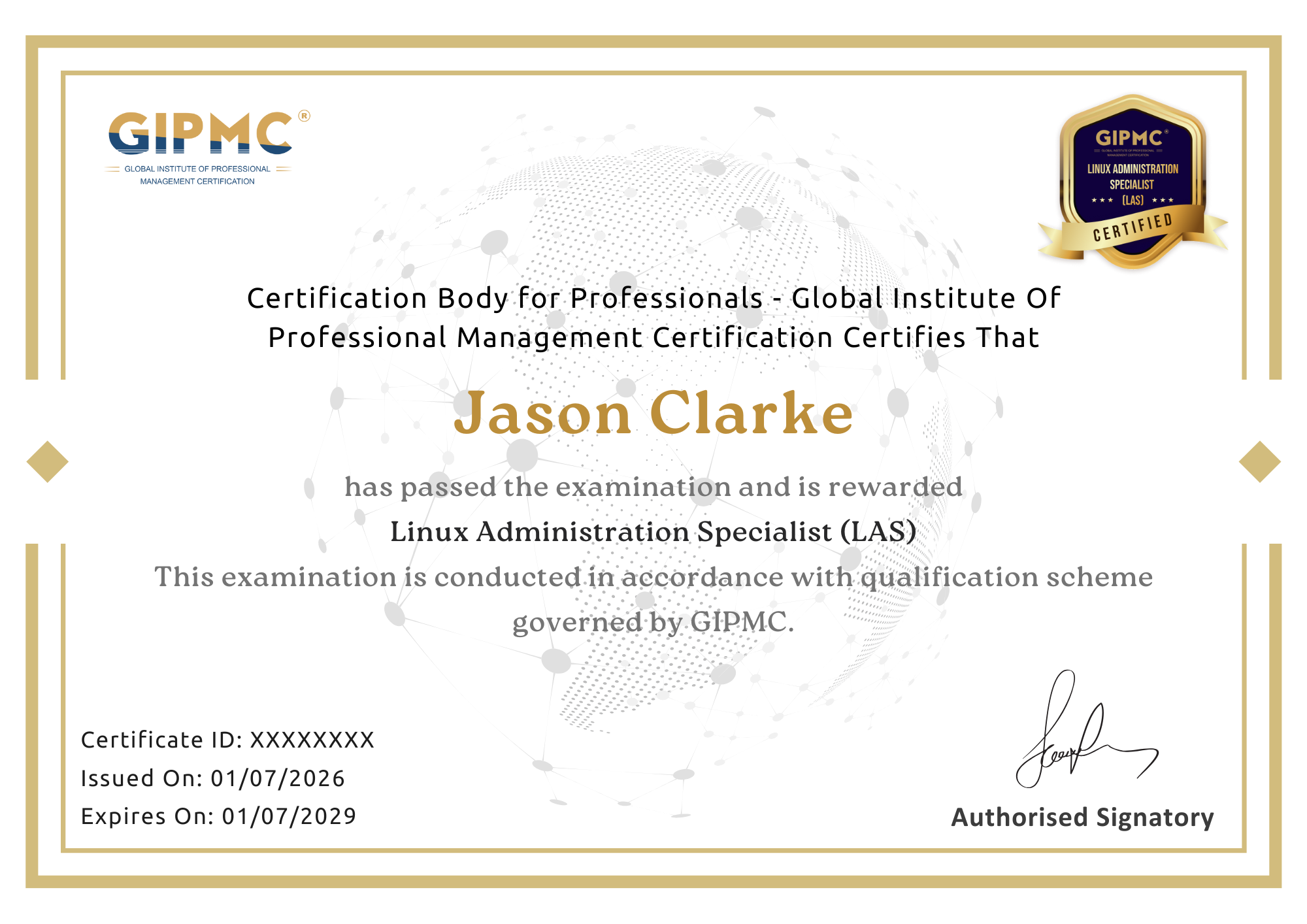
The Linux Administration Specialist (LAS) certification is valid for three (3) years from the date of certification award.
Renewal is designed to:
- Maintain professional credibility
- Ensure continued alignment with evolving Linux technologies and practices
- Protect the long-term value of the certification
Renewal Process Includes:
- Completion of defined continuing professional development or knowledge refresh requirements
- Successful renewal assessment or verification, as applicable
- Submission of renewal application before certification expiry
Timely renewal allows professionals to retain active certification status without interruption.