Course Description
Design, Build, and Scale Intelligent Systems
The Advanced Machine Learning Architect (AMLA) certification by GIPMC is a high-level professional credential designed to develop, validate, and recognize advanced machine learning architecture and solution design capabilities across industries and enterprise environments.
This certification emphasizes model design, system architecture, data pipelines, scalability, performance optimization, and deployment readiness, preparing professionals to architect machine learning solutions for both experimental and production-grade environments.
AMLA goes beyond algorithm knowledge. It equips professionals to design end-to-end ML systems, translate business problems into technical solutions, manage data and model lifecycles, and deliver reliable, scalable, and responsible machine learning outcomes.
Why Advanced Machine Learning Architect (AMLA) from GIPMC?
The AMLA certification is built on industry-aligned AI and machine learning competencies while remaining tool-neutral, platform-independent, and framework-agnostic. This allows certified professionals to apply their expertise across different technologies, cloud platforms, and organizational ecosystems.
Key Advantages
- Enterprise-focused machine learning architecture approach
- Coverage of classical, modern, and advanced ML techniques
- Strong emphasis on real-world system design and scalability
- Applicable across industries including technology, finance, healthcare, manufacturing, retail, and services
- Career-oriented certification aligned with senior technical roles
AMLA is designed for professionals progressing toward architect-level responsibility in machine learning and AI initiatives.
Market Relevance
- 35–55% higher earning potential for advanced ML professionals
- 75%+ hiring preference for candidates with proven ML architecture skills
- 50% reduction in model deployment failures with structured ML system design
- 2–3x faster transition into senior AI and architecture roles
(Based on aggregated industry hiring trends and enterprise AI adoption patterns.)
These indicators reflect the growing demand for machine learning architects who can design scalable, production-ready solutions.
Who Should Pursue AMLA? (Target Audience)
The AMLA certification is suitable for professionals working with or advancing into senior AI and ML roles, including:
- Machine Learning Engineers
- Data Scientists with system design responsibilities
- AI Architects and Solution Architects
- Software Engineers working on ML platforms
- MLOps and AI Infrastructure Professionals
- Technical Leads and Engineering Managers
- Professionals seeking advanced ML architecture expertise
Regardless of industry, AMLA provides a structured approach to designing robust machine learning systems.
Detailed Learning Outcomes
By earning the Advanced Machine Learning Architect (AMLA), candidates demonstrate competencies consistent with a CAPM project management certification, including the the ability to:
1. Machine Learning Foundations for Architects
- Machine learning problem types and solution mapping
- Model selection principles and trade-offs
- Bias, variance, and performance considerations
2. Data Architecture & Feature Engineering
- Data sourcing, ingestion, and preparation strategies
- Feature design, transformation, and selection
- Handling large-scale and streaming data
3. Machine Learning System Design
- End-to-end ML system architecture
- Offline vs real-time inference design
- Integration with existing enterprise systems
4. Model Development & Optimization
- Training strategies and evaluation techniques
- Hyperparameter tuning and performance optimization
- Handling imbalanced and noisy datasets
5. Advanced Learning Techniques
- Ensemble methods and model stacking
- Deep learning architecture concepts
- Transfer learning and representation learning
6. Model Validation & Performance Management
- Validation strategies and metric selection
- Overfitting detection and mitigation
- Model robustness and reliability testing
7. Scalability & Distributed Learning
- Distributed training concepts
- Large-scale model execution strategies
- Resource optimization for ML workloads
8. MLOps & Deployment Architecture
- Model packaging and deployment patterns
- CI/CD concepts for ML systems
- Monitoring, logging, and model versioning
9. Model Lifecycle & Governance
- Model lifecycle management
- Retraining and performance drift handling
- Documentation and audit readiness
10. Responsible & Ethical Machine Learning
- Fairness, transparency, and explainability
- Risk identification in ML systems
- Compliance-aware ML design
11. Security & Reliability in ML Systems
- Data and model security considerations
- Threats to ML pipelines
- Reliability and fault-tolerant design
12. Business Alignment & Solution Strategy
- Translating business requirements into ML solutions
- ROI-driven ML design decisions
- Stakeholder communication for technical solutions
13. Production Readiness & Solution Review
- Deployment readiness evaluation
- Performance benchmarking
- Continuous improvement strategies
Professional and Career Benefits
AMLA-certified professionals are recognized for their ability to:
- Design scalable, production-ready ML architectures
- Align machine learning solutions with business objectives
- Reduce deployment risk and operational failures
- Lead advanced AI initiatives with technical confidence
- Support enterprise-wide AI transformation
The certification enhances credibility and opens opportunities in roles such as:
- Machine Learning Architect
- AI Solutions Architect
- Senior Machine Learning Engineer
- Lead Data Scientist
- AI Platform Architect
- Head of Machine Learning / AI Engineering
Certification Validity & Renewal
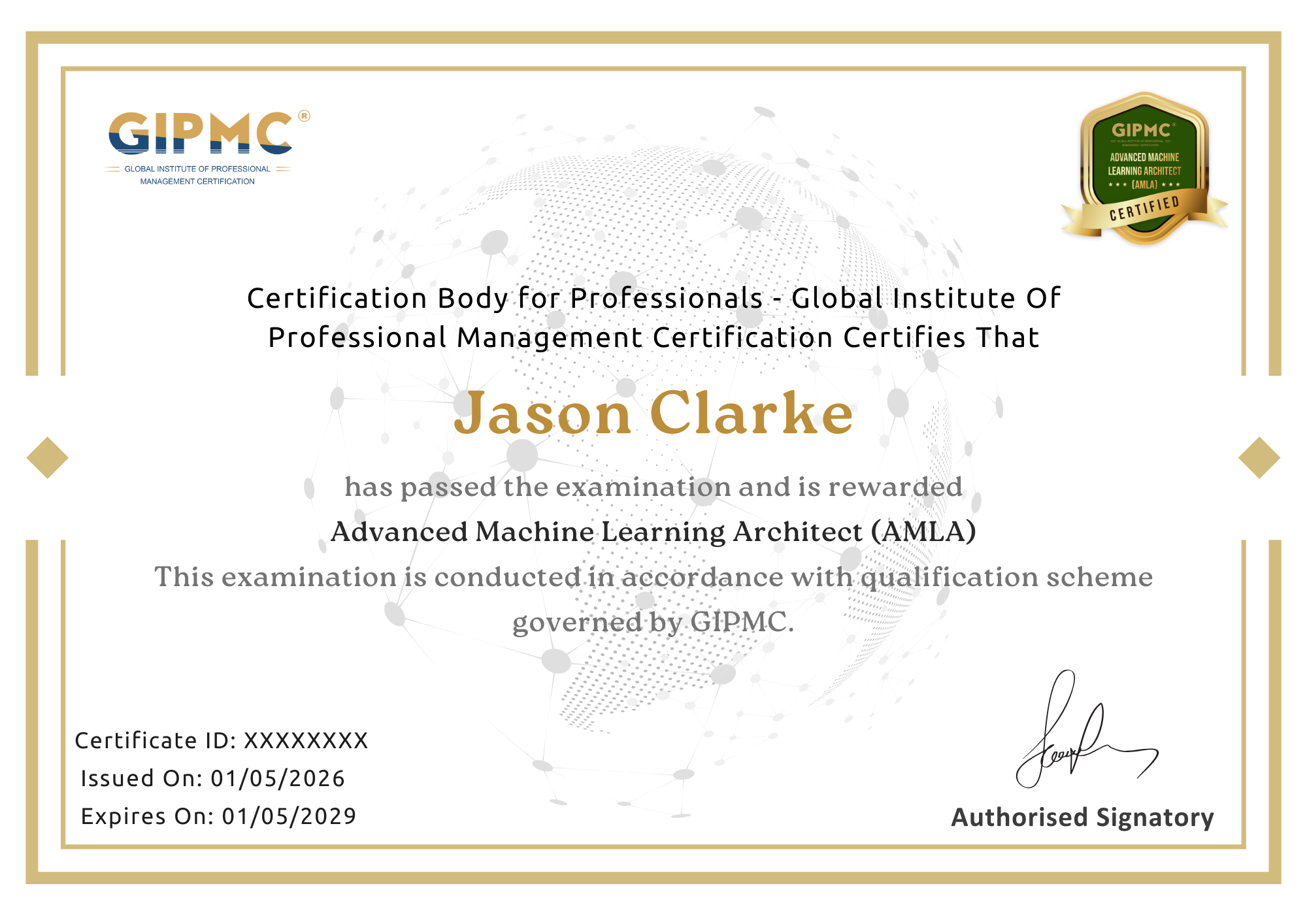
The Advanced Machine Learning Architect (AMLA) certification issued by GIPMC is valid for three (3) years from the date of certification award.
Renewal Purpose
Renewal is designed to:
- Maintain professional credibility in a rapidly evolving AI field
- Ensure alignment with current machine learning practices
- Protect the long-term value of the certification
Renewal Process Includes
- Completion of defined continuing professional development or knowledge refresh activities
- Successful renewal assessment or professional verification, as applicable
- Submission of renewal application before certification expiry
Timely renewal allows professionals to retain active certification status without interruption.