Course Description
Ensuring Product Quality, Testing Integrity, and Compliance in Pharmaceutical Laboratories
The Pharma Quality Control Analyst (PQCA) certification is a professional credential designed to develop, validate, and recognize analyst-level capability in pharmaceutical quality control testing, laboratory operations, and GMP compliance.
This certification prepares professionals to perform and support quality control activities across raw materials, in-process samples, finished products, and stability studies. It emphasizes laboratory testing principles, analytical techniques awareness, data integrity, documentation, deviation handling, and regulatory compliance—ensuring product quality, consistency, and patient safety.
PQCA goes beyond basic laboratory skills by equipping professionals with the regulatory awareness, analytical discipline, and quality mindset required to operate effectively in regulated pharmaceutical QC environments.
Why Pharma Quality Control Analyst (PQCA) from GIPMC?
Quality control laboratories are critical checkpoints in pharmaceutical manufacturing, where data accuracy and compliance directly impact product release and regulatory trust. PQCA is industry-aligned, GMP-focused, and role-specific, enabling professionals to perform QC activities with confidence and compliance.
Key Advantages
- Analyst-focused pharmaceutical QC credential
- Strong alignment with GMP and laboratory best practices
- Emphasis on data integrity and documentation accuracy
- Applicable across chemical, microbiological, and physical testing environments
- Career-oriented certification with regulatory relevance
PQCA is designed for professionals operating at the quality control analyst and laboratory support level.
The Pharma Quality Control Analyst (PQCA) certification is suitable for professionals involved in laboratory testing and quality control activities, including:
- Pharmaceutical Quality Control Analysts
- Laboratory Analysts and Technicians
- GMP and QC Support Staff
- Stability, Raw Material, and In-Process Testing Analysts
- Professionals transitioning into pharmaceutical QC roles
- Manufacturing and Quality Operations Support Professionals
- Life Sciences graduates entering regulated laboratory environments
Across the pharmaceutical lifecycle, PQCA provides a structured foundation for compliant QC laboratory practice.
Market Relevance
With increasing regulatory scrutiny and global pharmaceutical production growth, qualified QC analysts are in strong demand.
- 70–90% of regulatory inspection findings involve laboratory controls, data integrity, or QC documentation
- 65–85% employer preference for QC professionals with formal GMP and laboratory compliance credentials
- 30–50% reduction in laboratory-related deviations through trained and compliant QC analysts
- 2x higher batch release confidence and inspection readiness in organizations with structured QC competency development
(Based on aggregated global pharmaceutical inspection, GMP compliance, and laboratory quality trends.)
These figures demonstrate why pharmaceutical quality control expertise is essential to product quality and regulatory success.
Detailed Learning Outcomes
By earning the Pharma Quality Control Analyst (PQCA), candidates demonstrate competencies consistent with a CAPM project management certification, including the ability to:
1. Fundamentals of Pharmaceutical Quality Control
- Role of QC in pharmaceutical manufacturing
- Relationship between QC, QA, and GMP
- QC responsibilities across the product lifecycle
2. Regulatory and GMP Requirements for QC
- Overview of GMP expectations for laboratories
- Regulatory inspection focus areas
- Analyst responsibilities for compliance
3. Laboratory Organization and Good Laboratory Practices
- Laboratory setup and workflow
- Sample handling and storage
- Maintaining controlled laboratory environments
4. Raw Material and Packaging Material Testing
- Sampling and testing principles
- Acceptance criteria and specifications
- Supporting supplier quality
5. In-Process and Finished Product Testing
- Purpose of in-process controls
- Finished product testing concepts
- Supporting batch release decisions
6. Analytical Methods and Test Procedures
- Understanding test methods and SOPs
- Method adherence and consistency
- Awareness of method validation concepts
7. Equipment Use, Calibration, and Maintenance
- Proper use of laboratory instruments
- Calibration and qualification awareness
- Preventing equipment-related errors
8. Documentation and Data Integrity
- Accurate data recording and reporting
- Data integrity principles and controls
- Preventing data errors and omissions
9. Out-of-Specification (OOS) and Atypical Results
- Identifying OOS and abnormal results
- Analyst role in investigations
- Maintaining objectivity and traceability
10. Deviation Handling and CAPA Awareness
- Reporting laboratory deviations
- Supporting root cause analysis
- Implementing corrective actions
11. Stability Studies and Sample Management
- Purpose of stability testing
- Sample tracking and storage
- Supporting product shelf-life assessment
12. Laboratory Safety and Compliance
- Chemical and biological safety practices
- Personal protective equipment and safe handling
- Maintaining a safe laboratory environment
13. Professional Practice and QC Analyst Development
- Analyst responsibilities and ethics
- Continuous learning in QC laboratories
- Preparing for advanced QC or QA roles
Professional and Career Benefits
Pharma Quality Control Analyst (PQCA) certified professionals are recognized for their ability to:
- Perform QC testing accurately and compliantly
- Maintain data integrity and laboratory discipline
- Support regulatory inspections and audits
- Reduce laboratory errors and deviations
- Contribute to consistent product quality and patient safety
The certification supports career advancement into roles such as:
- Pharmaceutical Quality Control Analyst
- Senior QC Analyst or Laboratory Specialist
- Stability or Method Support Analyst
- QC Team Lead or Supervisor
- QA or Compliance Support Professional
- Pharmaceutical Laboratory Quality Specialist
Certification Validity & Renewal
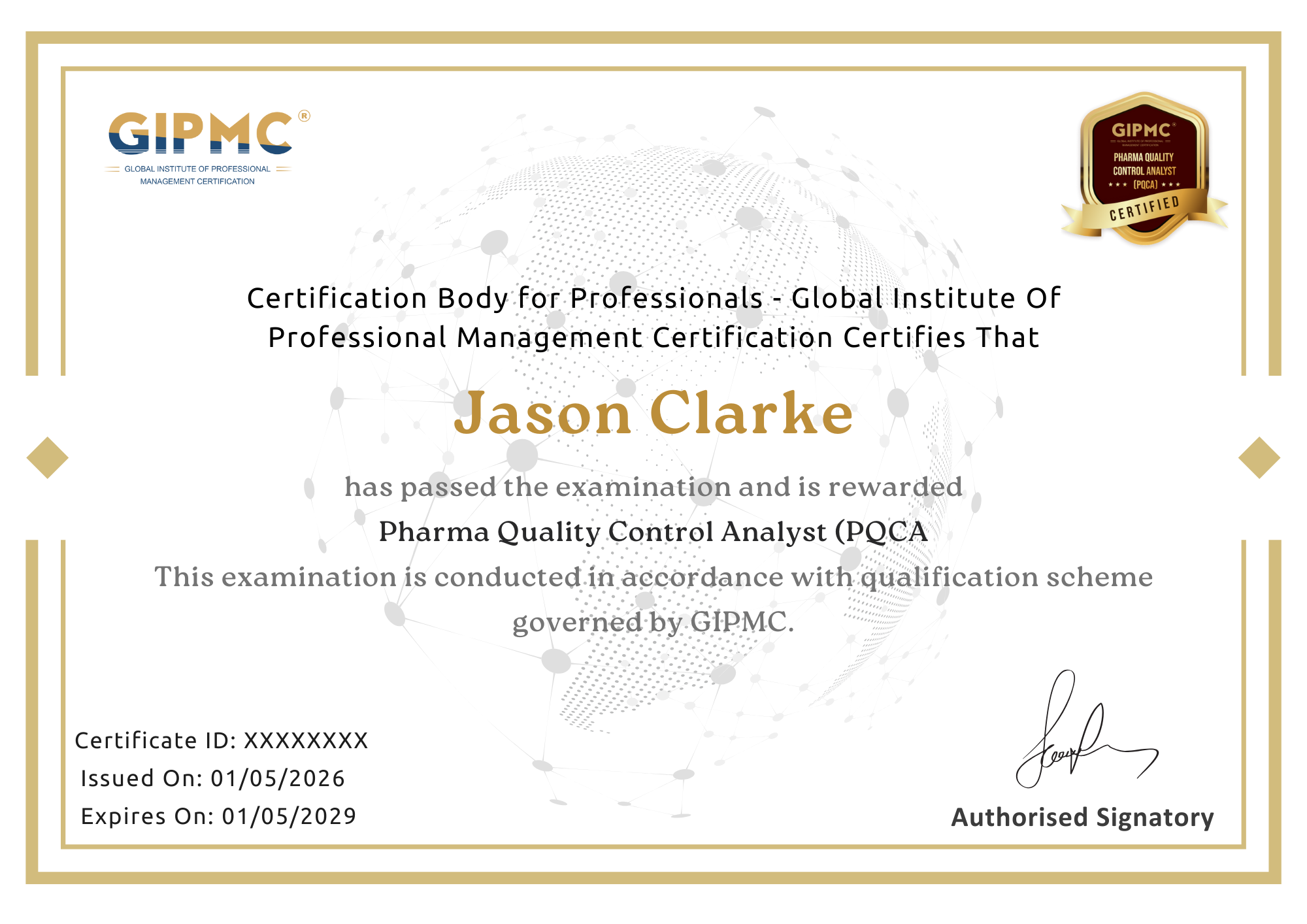
The Pharma Quality Control Analyst (PQCA) certification is valid for three (3) years from the date of certification award.
Renewal is designed to:
- Maintain professional credibility
- Ensure continued alignment with evolving GMP and laboratory practices
- Protect the long-term value of the certification
Renewal Process Includes:
- Completion of defined continuing professional development or knowledge refresh requirements
- Successful renewal assessment or verification, as applicable
- Submission of renewal application before certification expiry
Timely renewal allows professionals to retain active certification status without interruption.