Course Description
Lead Advanced Wireless Network Design, Security, Optimization, and Operations
The Wireless Network Expert Professional (WNEP) certification by GIPMC is an advanced professional credential designed to develop, validate, and recognize expert-level competence in wireless networking across enterprise environments.
This certification focuses on advanced wireless architecture, enterprise deployment strategy, performance tuning, troubleshooting mastery, security best practices, and operational excellence, preparing professionals to lead complex Wi-Fi environments with reliability, scalability, and strong network governance.
WNEP goes beyond administration and design. It equips professionals to handle advanced wireless challenges such as high-density performance planning, multi-site standardization, complex roaming issues, interference mitigation, secure access models, and continuous improvement, enabling them to drive business-critical wireless outcomes.
Why Wireless Network Expert Professional (WNEP) from GIPMC?
The WNEP certification is built to validate expert-level wireless competencies while remaining technology-neutral, framework-agnostic, and vendor-independent. This makes it relevant for wireless professionals working across different vendors, industries, and network ecosystems.
Key Advantages
- Advanced focus on end-to-end wireless mastery
- Covers architecture, optimization, security, and operational leadership
- Emphasis on real-world problem solving and expert troubleshooting
- Applicable for enterprise networks, large campuses, multi-branch deployments, and high-density Wi-Fi
- Career-oriented credential for senior wireless engineering and leadership roles
WNEP is ideal for professionals who want to demonstrate advanced wireless expertise and take ownership of critical wireless infrastructure.
Market Relevance
Wireless networks have become a business-critical service layer for productivity, customer experience, and digital operations. As environments grow in size and complexity, organizations need experts who can ensure high performance, security, and consistent service availability.
Key reasons expert wireless skills are increasingly valuable include:
- Rapid growth in device density due to BYOD and IoT adoption
- Higher performance expectations for real-time collaboration and cloud applications
- Growing need for secure wireless access across distributed environments
- Continuous demand for experts who can reduce downtime and optimize network experience
(Based on aggregated enterprise networking and wireless operations trends.)
Who Should Pursue WNEP? (Target Audience)
The Wireless Network Expert Professional (WNEP) certification is best suited for experienced professionals who manage complex wireless environments, including:
- Senior Wireless Engineers and Network Engineers
- Wireless Network Architects and Infrastructure Specialists
- Network Operations Leads and Technical Managers
- Security-focused Network Professionals handling Wi-Fi protection
- IT Infrastructure Consultants supporting enterprise deployments
- Professionals responsible for multi-site wireless standardization
- Experienced administrators upgrading to expert-level credentials
- Engineers involved in high-density and mission-critical Wi-Fi environments
WNEP provides a structured pathway for professionals aiming to prove and strengthen expert-level wireless capability.
Detailed Learning Outcomes
By earning the Wireless Network Expert Professional (WNEP), candidates demonstrate competencies consistent with a CAPM project management certification, including the the ability to:
1. Advanced Wireless Architecture and Enterprise Strategy
- Designing scalable wireless architectures for large organizations
- Standardizing wireless services across sites and environments
- Aligning wireless strategy with business and operational goals
2. High-Density Wi-Fi Design and Capacity Engineering
- Planning for large-scale user density and peak traffic
- Managing performance in auditoriums, campuses, and enterprise hubs
- Supporting consistent quality under high usage conditions
3. Advanced RF Optimization and Interference Control
- Identifying and reducing interference through expert planning
- Improving stability through channel and coverage optimization concepts
- Maintaining performance across complex indoor environments
4. Roaming Performance and Mobility Excellence
- Optimizing roaming behavior for seamless wireless mobility
- Reducing disconnects and improving user continuity
- Supporting enterprise mobility needs across zones and floors
5. Wireless Security Architecture and Secure Access Models
- Strengthening wireless security posture with access control concepts
- Supporting secure authentication models and segmentation planning
- Reducing wireless risks while maintaining productivity
6. Expert Troubleshooting and Root Cause Analysis
- Diagnosing complex Wi-Fi issues using structured troubleshooting approaches
- Handling recurring performance incidents and unstable connectivity patterns
- Resolving multi-factor wireless problems across layered environments
7. Monitoring, Observability, and Wireless Analytics
- Building performance monitoring and visibility concepts
- Tracking experience-level indicators and network health patterns
- Using analytics to guide improvement decisions
8. Multi-Site Wireless Operations and Standardization
- Managing wireless operations across multiple branches or campuses
- Establishing consistent configuration and documentation practices
- Supporting scalable operations with repeatable standards
9. Wireless Change Management and Service Reliability
- Planning wireless changes without disrupting user access
- Supporting service continuity through controlled deployment practices
- Minimizing downtime during upgrades and optimization tasks
10. Wireless Risk Management and Governance Awareness
- Understanding risk impact from wireless instability or exposure
- Supporting policy-aligned wireless operations and access decisions
- Improving long-term trust through responsible wireless governance
11. Leadership and Collaboration in Wireless Projects
- Working across network, security, and IT operations teams
- Communicating technical decisions to stakeholders clearly
- Leading wireless improvement projects confidently
12. Continuous Improvement and Future Readiness
- Building ongoing wireless improvement cycles
- Keeping wireless infrastructure prepared for new demands
- Supporting long-term scalability and modernization planning
Professional and Career Benefits
WNEP-certified professionals are recognized for their ability to:
- Lead complex wireless deployments and improvements
- Design scalable Wi-Fi environments with strong performance outcomes
- Strengthen wireless security and reduce operational risk
- Troubleshoot and resolve high-impact wireless incidents efficiently
- Maintain enterprise wireless reliability through monitoring and governance
Career Opportunities
The Wireless Network Expert Professional (WNEP) certification supports progression into roles such as:
- Senior Wireless Engineer
- Wireless Network Architect
- Wireless Infrastructure Lead
- Network Reliability Engineer (Wireless Focus)
- Enterprise Wireless Consultant
- Wireless Security and Operations Specialist
Certification Validity & Renewal
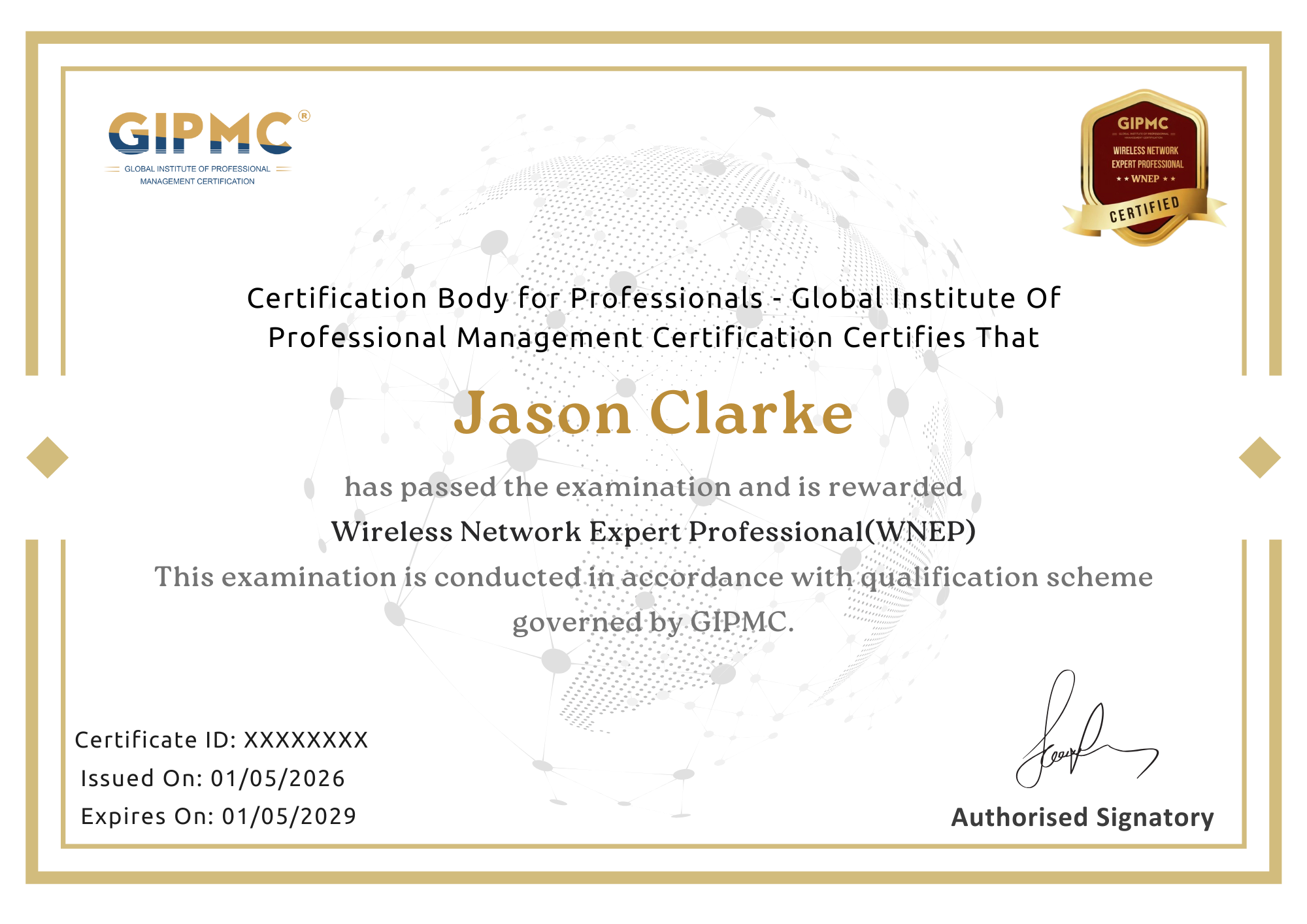
The Wireless Network Expert Professional (WNEP) certification issued by GIPMC is valid for three (3) years from the date of certification award.
Renewal Process Includes
- Completion of professional development or advanced skill refresh activities
- Renewal assessment or professional verification, as applicable
- Submission of renewal application before certification expiry
Timely renewal allows professionals to retain active certification status without interruption.