Course Description
Support Strategic Decisions with Management Accounting and Global Business Insight
The Global Management Accountant (GMA) certification by GIPMC is a professional credential designed to develop, validate, and recognize management accounting and business performance analysis capabilities in a global organizational context.
This certification focuses on management accounting fundamentals, cost and performance analysis, budgeting awareness, financial decision support, and strategic business insight, preparing professionals to support management decisions across diverse industries and international environments.
GMA emphasizes management-focused accounting rather than statutory compliance. It equips professionals to analyze financial information, support planning and control, evaluate performance, and contribute to value-driven busines
Why Global Management Accountant (GMA) from GIPMC?
GIPMC’s Global Management Accountant (GMA) is built on internationally relevant management accounting competencies while remaining framework-neutral, industry-agnostic, and decision-focused. This enables certified professionals to apply management accounting skills across organizations of different sizes, sectors, and geographies.
Key Advantages
- Globally applicable management accounting competency framework
- Strong focus on planning, control, and performance management
- Practical, scenario-driven financial analysis approach
- Applicable across multinational, regional, and growing organizations
- Career-oriented credential supporting strategic finance roles
GMA is designed for professionals involved in business performance management and decision support.
Market Relevance
- 65%+ organizations rely on management accounting for strategic decisions
- 55% improvement in financial planning accuracy with skilled management accountants
- 50% stronger cost control and performance visibility
- 2× better alignment between financial insights and business strategy
(Based on aggregated finance leadership, performance management, and global business trends.)
These indicators highlight why management accounting skills are essential in global business environments.
Who Should Pursue GMA?
The Global Management Accountant (GMA) certification is suitable for professionals involved in finance, analysis, and business decision support, including:
- Management and Cost Accountants
- Financial and Business Analysts
- Budgeting and Planning Professionals
- Project and Operations Finance Specialists
- Controllers and Finance Managers
- Consultants and Advisory Professionals
- Professionals transitioning into management accounting roles
GMA provides a globally relevant foundation for management accounting careers.
Detailed Learning Outcomes
By earning the Global Management Accountant (GMA), candidates demonstrate competencies consistent with a CAPM project management certification, including the the ability to:
1. Foundations of Management Accounting
- Role of management accounting in organizations
- Financial vs management accounting
- Value creation perspective
2. Cost Concepts & Cost Behavior
- Cost classification and behavior analysis
- Cost drivers and structures
- Supporting managerial decisions
3. Budgeting & Forecasting Awareness
- Budget preparation concepts
- Forecasting techniques
- Aligning budgets with strategy
4. Cost & Performance Analysis
- Analyzing cost performance
- Identifying variances
- Interpreting financial results
5. Planning, Control & Decision Support
- Using financial information for planning
- Control mechanisms
- Supporting managerial decisions
6. Financial Performance Measurement
- Key performance indicators (KPIs)
- Financial and non-financial measures
- Balanced performance views
7. Strategic Cost Management
- Cost management for competitive advantage
- Long-term cost considerations
- Value chain awareness
8. Business & Investment Decision Awareness
- Supporting investment evaluation
- Financial implications of business decisions
- Risk and return considerations
9. Global Business & Financial Context
- Managing finance in global environments
- Currency and cross-border awareness
- International business considerations
10. Risk, Governance & Control Awareness
- Financial risk identification
- Internal controls and governance
- Ethical financial practices
11. Management Reporting & Communication
- Preparing management reports
- Communicating financial insights
- Supporting executive decision-making
12. Digital & Data Awareness in Management Accounting
- Impact of digital tools on accounting
- Data-driven decision support
- Automation awareness
13. Career Development in Management Accounting
- Professional growth pathways
- Skill development roadmap
- Continuous learning mindset
Professional and Career Benefits
GMA certified professionals are recognized for their ability to:
- Support strategic and operational decision-making
- Analyze costs and financial performance effectively
- Improve planning and control processes
- Communicate financial insights clearly
- Strengthen business value through financial expertise
Certification Validity & Renewal
Certification Validity:
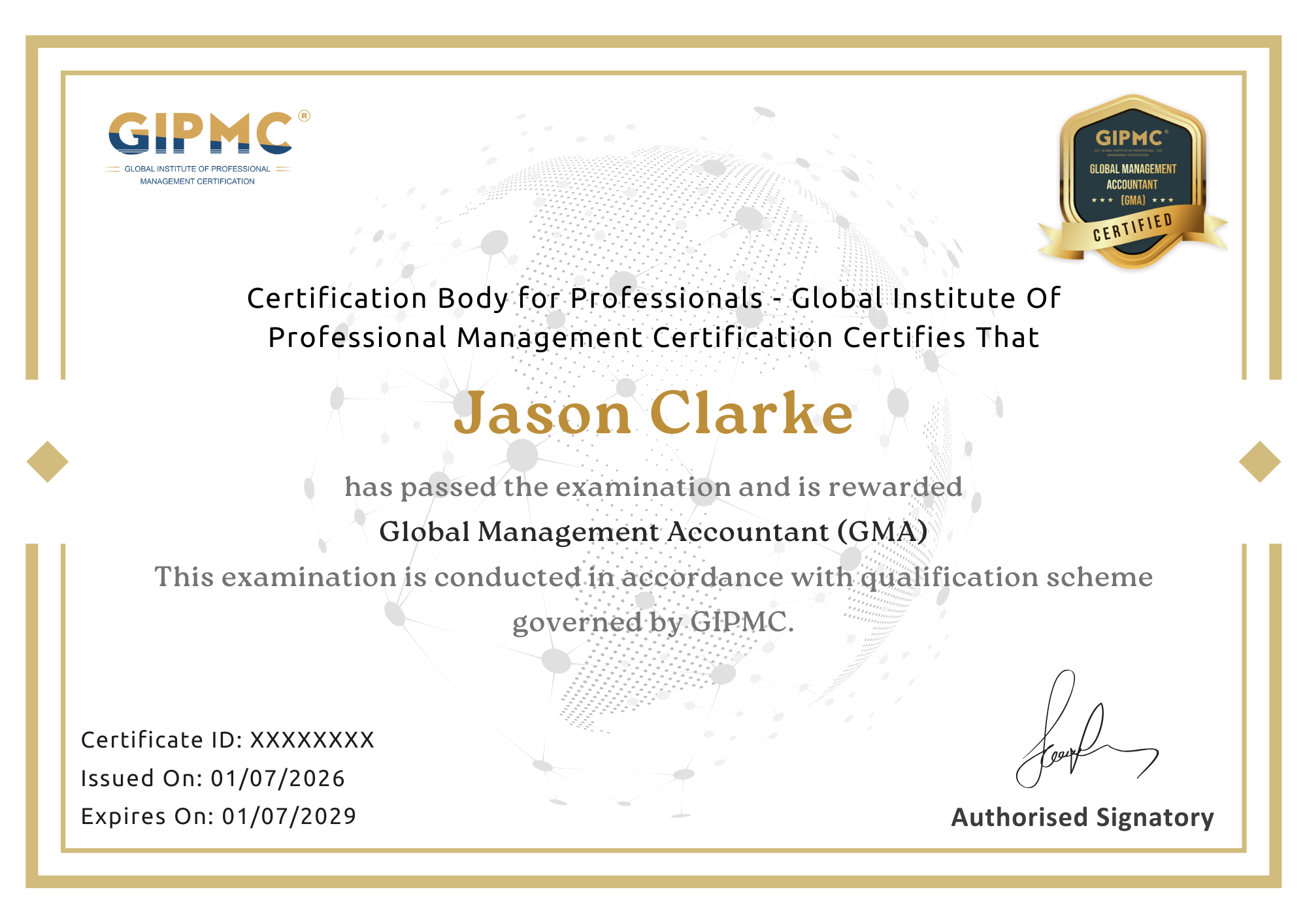
The Global Management Accountant (GMA) certification is valid for three (3) years from the date of award.
Renewal:
Yes, certification renewal is required.
Renewal Purpose
- Maintain alignment with evolving management accounting practices
- Ensure continued professional relevance
- Protect the long-term value of the certification
Renewal Process Includes
- Completion of continuing professional development or management accounting knowledge refresh
- Renewal assessment or professional verification, as applicable
- Submission of renewal application before certification expiry
Timely renewal allows professionals to retain active certification status without interruption.