Course Description
Investigate Digital Evidence, Uncover Cyber Incidents, and Support Legal & Security Outcomes
The Digital Forensics Analyst (DFA) certification is a professional credential designed to develop and validate expertise in digital forensic investigation, evidence handling, and incident analysis. It equips professionals with the technical, analytical, and procedural knowledge required to identify, preserve, analyze, and report digital evidence in a legally defensible manner.
DFA focuses on forensic readiness and investigative accuracy, enabling professionals to support cybersecurity investigations, internal audits, incident response, and legal proceedings across diverse digital environments.
Why Digital Forensics Analyst (DFA) from GIPMC?
The DFA certification is built to be vendor-neutral, tool-independent, and jurisdiction-aware, allowing professionals to apply forensic principles across operating systems, devices, networks, and cloud environments without reliance on specific proprietary tools.
Key Advantages
- Globally applicable digital forensics competency framework
- Balanced coverage of technical analysis and legal process awareness
- Practical, scenario-driven learning approach
- Alignment with cybersecurity, incident response, and legal requirements
- Career-focused credential for digital investigation professionals
DFA supports professionals responsible for investigating cyber incidents and handling digital evidence responsibly.
Market Relevance
- 80%+ of cybercrime investigations rely on digital forensic evidence
- Average cost of a data breach exceeds USD 4 million, increasing demand for forensic analysis
- Organizations with forensic readiness reduce investigation time by 30–50%
- Digital evidence is used in over 70% of corporate fraud and misconduct cases
- Demand for digital forensics and cyber investigation roles is growing at 15–20% annually
(Based on aggregated cybersecurity incident response, law enforcement, and digital investigation trends.)
These figures highlight the growing importance of skilled digital forensics professionals in cybersecurity and legal contexts.
Who Should Pursue DFA? (Target Audience)
The Digital Forensics Analyst (DFA) certification is suitable for professionals involved in investigation, security, and compliance roles, including:
- Digital Forensics Analysts and Investigators
- Cybersecurity and Incident Response Professionals
- SOC Analysts and Threat Investigators
- Law Enforcement and Legal Support Professionals
- Risk, Compliance, and Audit Specialists
- IT and Security Professionals transitioning into forensics
- Consultants supporting cyber investigations
DFA provides a structured pathway to professional digital forensic capability.
Detailed Learning Outcomes
By earning the Digital Forensics Analyst (DFA), candidates demonstrate competencies consistent with a CAPM project management certification, including the the ability to:
1. Foundations of Digital Forensics
- Role and objectives of digital forensics
- Types of digital evidence
- Forensic principles and ethics
2. Legal & Regulatory Awareness
- Legal considerations in digital investigations
- Chain of custody and evidence integrity
- Forensic readiness and compliance awareness
3. Digital Evidence Handling
- Evidence identification and preservation
- Imaging and acquisition concepts
- Documentation and integrity verification
4. Operating System Forensics
- File systems and artifacts overview
- User activity and system timeline analysis
- Windows and Unix-based system awareness
5. Network & Log Forensics
- Network traffic and log analysis concepts
- Identifying intrusion and anomaly indicators
- Correlating logs and events
6. Email & Communication Forensics
- Email header and message analysis
- Messaging and collaboration platform awareness
- Tracing communication artifacts
7. Malware & Intrusion Investigation Basics
- Indicators of compromise (IOCs)
- Malware behavior analysis concepts
- Supporting incident response investigations
8. Cloud & Virtual Environment Forensics
- Cloud forensic challenges and approaches
- Shared responsibility considerations
- Evidence collection in virtualized systems
9. Mobile & Endpoint Forensics Awareness
- Mobile device forensic concepts
- Endpoint artifacts and data sources
- Access and privacy considerations
10. Timeline & Event Reconstruction
- Event correlation techniques
- Reconstructing attack or incident timelines
- Establishing cause and impact
11. Forensic Reporting & Documentation
- Writing clear and defensible reports
- Presenting findings to technical and non-technical stakeholders
- Supporting legal and disciplinary actions
12. Ethics, Professional Conduct & Continuous Learning
- Ethical responsibilities of forensic analysts
- Confidentiality and impartiality
- Staying current with evolving forensic challenges
Professional and Career Benefits
DFA-certified professionals are recognized for their ability to:
- Conduct structured and legally defensible digital investigations
- Preserve and analyze digital evidence accurately
- Support cybersecurity incident response and legal processes
- Reduce investigation time and organizational risk
- Contribute to trust, accountability, and compliance
The certification enhances credibility and opens opportunities in roles such as:
- Digital Forensics Analyst
- Cyber Investigation Specialist
- Incident Response or SOC Investigator
- Cybercrime or Fraud Analyst
- Security and Compliance Investigator
- Digital Forensics Consultant
Certification Validity & Renewal
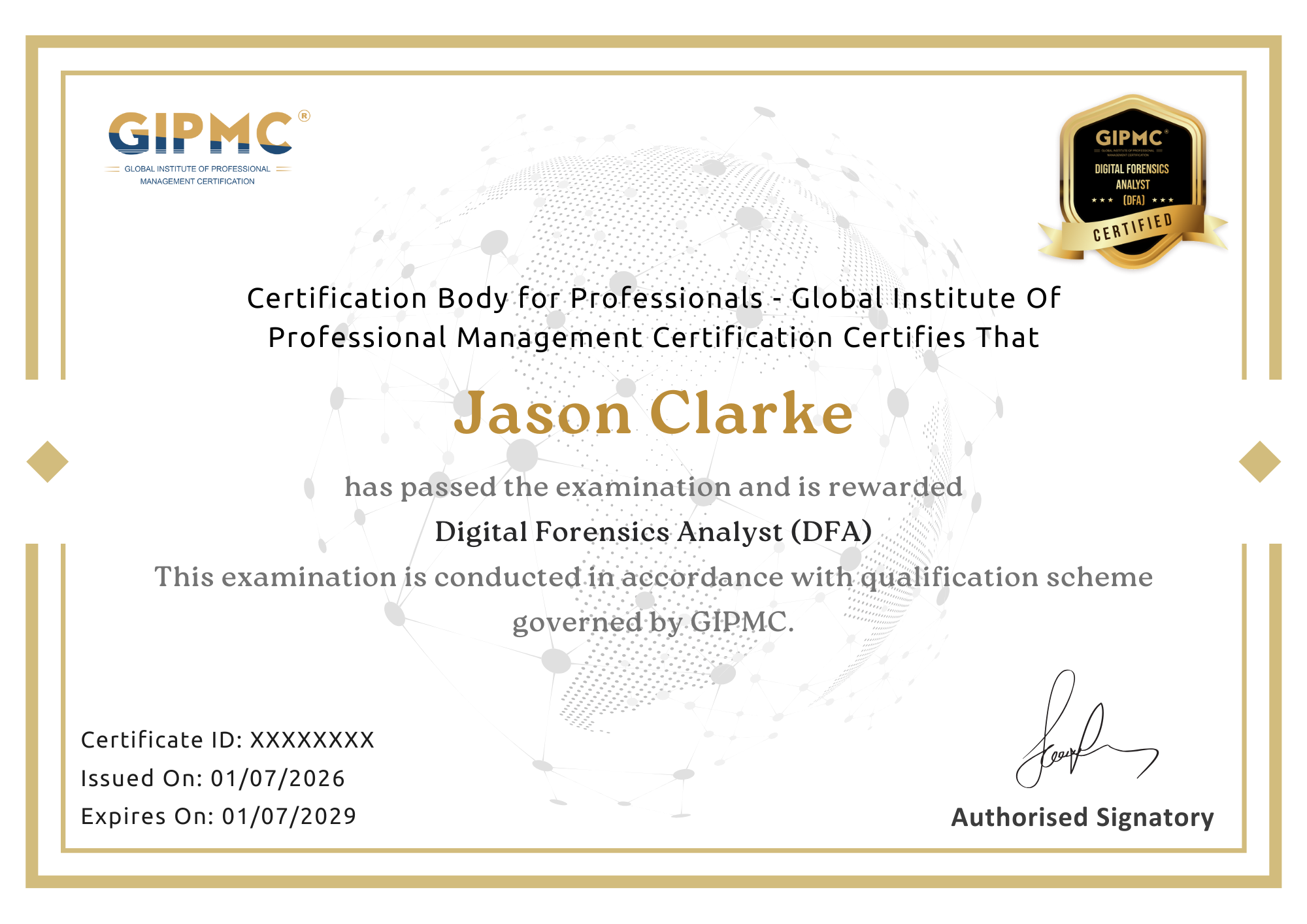
The Digital Forensics Analyst (DFA) certification is valid for three (3) years from the date of certification award.
Renewal Objectives
- Maintain relevance with evolving technologies and investigation methods
- Stay aligned with legal and forensic best practices
- Preserve the long-term value of the certification
Renewal Requirements Include:
- Completion of defined continuing professional development or forensic training activities
- Successful renewal assessment or competency validation, as applicable
- Submission of renewal application prior to certification expiry
Timely renewal allows professionals to retain active certification status without interruption.