Course Description
Build Strong Foundations in Software Project and Delivery Management
The Software Management Associate (SMA) certification by GIPMC is a professional, entry-to-associate level credential designed to develop, validate, and recognize foundational knowledge of software management concepts used in modern technology-driven organizations.
This certification focuses on software lifecycle awareness, coordination between technical and business teams, planning fundamentals, delivery tracking, and quality alignment, preparing professionals to support software initiatives effectively without requiring deep technical expertise.
SMA emphasizes management awareness rather than coding skills. It equips professionals to understand how software projects are planned, executed, monitored, and delivered, enabling better collaboration, coordina
Why Software Management Associate (SMA) from GIPMC?
GIPMC’s Software Management Associate (SMA) is built on industry-aligned software delivery and management competencies while remaining methodology-neutral and role-focused. This allows certified professionals to work across different software development approaches, tools, and organizational structures.
Key Advantages
- Globally relevant software management foundation
- Balanced focus on planning, coordination, and delivery awareness
- Practical, scenario-driven learning approach
- Applicable across Agile, traditional, and hybrid environments
- Career-oriented credential for technology and digital roles
SMA is designed to support professionals at the early stages of software and digital management careers.
Market Relevance
- 70%+ organizations require non-technical roles to understand software delivery
- 55% improvement in delivery coordination with management-aware teams
- 45% reduction in rework through better requirement and change understanding
- 2× stronger collaboration between business and technical teams
(Based on aggregated software delivery, digital transformation, and workforce readiness trends.)
These indicators highlight why software management fundamentals are essential beyond technical roles.
Who Should Pursue SMA?
The Software Management Associate (SMA) certification is suitable for professionals involved in or supporting software initiatives, including:
- Software Project and Delivery Coordinators
- Business Analysts and Product Support Staff
- QA, Testing, and Operations Professionals
- IT and Digital Operations Associates
- Graduates entering software-related roles
- Professionals transitioning into tech environments
- Non-technical team members working with software teams
SMA provides a structured foundation for understanding software delivery environments.
Detailed Learning Outcomes
By earning the Software Management Associate (SMA), candidates demonstrate competencies consistent with a CAPM project management certification, including the the ability to:
1. Foundations of Software Management
- Role of software in modern organizations
- Software management vs software development
- Key stakeholders and responsibilities
2. Overview of Software Development Lifecycles
- Common lifecycle models
- Phases from initiation to release
- Management perspective on lifecycles
3. Requirements & Scope Awareness
- Understanding software requirements
- Scope definition and boundaries
- Managing requirement changes
4. Planning & Estimation Basics
- Planning concepts for software work
- Estimation awareness (time, effort, cost)
- Scheduling fundamentals
5. Roles in Software Teams
- Product, delivery, and support roles
- Business–technical collaboration
- Responsibility clarity
6. Quality & Testing Awareness
- Importance of quality in software delivery
- Testing stages and objectives
- Management role in quality assurance
7. Change & Configuration Awareness
- Managing changes in software projects
- Versioning and configuration concepts
- Impact assessment basics
8. Risk & Issue Awareness
- Common software project risks
- Issue identification and escalation
- Supporting mitigation efforts
9. Communication & Coordination
- Managing information flow
- Stakeholder communication basics
- Supporting team collaboration
10. Delivery Tracking & Reporting
- Understanding progress tracking
- Milestones and deliverables
- Reporting status effectively
11. Introduction to Agile & Iterative Delivery
- Agile concepts at a high level
- Iterative delivery awareness
- Adapting to change
12. Governance, Ethics & Professional Conduct
- Accountability in software management
- Data and information responsibility
- Professional behavior
13. Career Pathways in Software Management
- Progression to advanced roles
- Skill development roadmap
- Continuous learning mindset
Professional and Career Benefits
SMA certified professionals are recognized for their ability to:
- Understand software delivery from a management perspective
- Support coordination between business and technical teams
- Contribute to smoother project execution
- Reduce misunderstandings and delivery friction
- Build a strong base for advanced software or project roles
SMA supports entry and progression into roles such as:
- Software Management Associate
- Project or Delivery Coordinator
- Product or Business Support Analyst
- QA or Operations Coordinator
- Junior Project Management Roles
- Digital Operations Associate
Certification Validity & Renewal
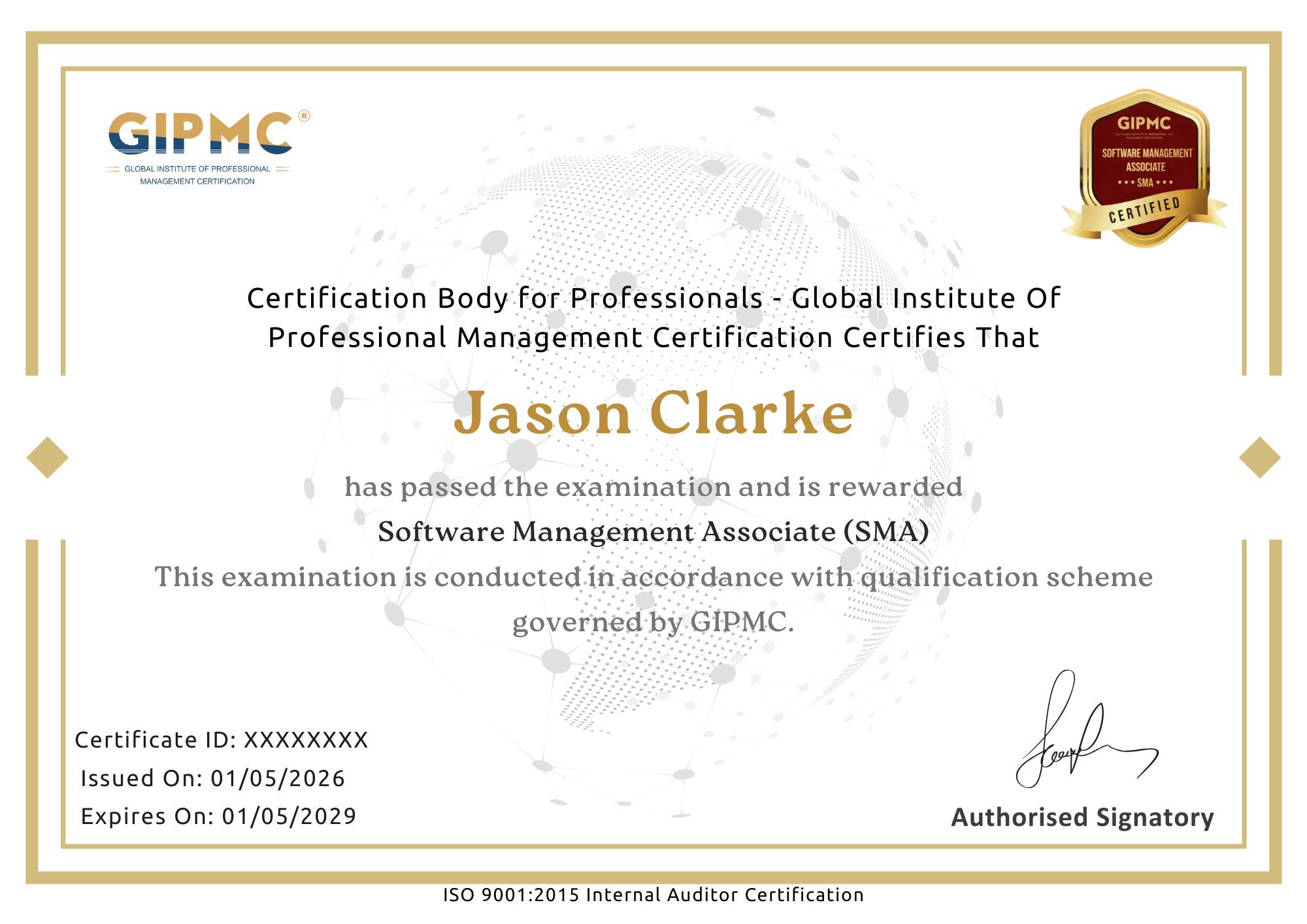
The Software Management Associate (SMA) certification is valid for three (3) years from the date of award.
Renewal:
Yes, certification renewal is required.
Renewal Purpose
- Maintain alignment with evolving software delivery practices
- Ensure continued professional relevance
- Protect the long-term value of the certification
Renewal Process Includes
- Completion of continuing professional development or software management knowledge refresh
- Renewal assessment or professional verification, as applicable
- Submission of renewal application before certification expiry
Timely renewal allows professionals to retain active certification status without interruption.