Course Description
Leading Artificial Intelligence Management System Audits with Trust, Ethics, and Global Standards
The ISO/IEC 42001 Lead Auditor Certification is an advanced professional credential designed to develop, validate, and recognize expertise in leading audits of Artificial Intelligence Management Systems (AIMS) in accordance with the ISO/IEC 42001 international standard.
This certification prepares professionals to plan, manage, conduct, and report audits that assess how organizations govern, design, deploy, monitor, and improve AI systems responsibly. It emphasizes ethical AI governance, risk-based assurance, transparency, accountability, and continual improvement, enabling auditors to evaluate AI systems across technical, organizational, and regulatory dimensions.
The ISO/IEC 42001 Lead Auditor Certification goes beyond technical AI knowledge by equipping professionals wit
Why ISO/IEC 42001 Lead Auditor Certification (AI Management Systems) from GIPMC?
ISO/IEC 42001 is the world’s first international certifiable management system standard for artificial intelligence, providing a structured framework for responsible AI governance. This certification is vendor-neutral, technology-agnostic, and globally applicable, allowing auditors to operate across industries, AI use cases, and regulatory environments.
Key Advantages
- Based on the first internationally recognized AI management system standard
- Vendor-neutral and framework-independent
- Strong focus on ethical AI, risk management, and governance
- Supports regulatory readiness for AI laws and guidelines
- Applicable across all industries developing or using AI systems
This certification is designed for professionals expected to lead AI governance audits and provide assurance on responsible AI practices.
Market Relevance
As AI adoption accelerates and governments introduce AI regulations, organizations increasingly require qualified professionals to audit AI governance and risk controls.
- 40–55% reduction in AI-related governance and compliance risks reported by organizations implementing structured AI management systems
- 65–80% employer preference for auditors with recognized AI governance and ISO-aligned credentials
- 35–50% improvement in AI transparency, accountability, and oversight through formal AIMS audits
- 2x higher stakeholder and regulator confidence in organizations with independently audited AI management systems
(Based on aggregated global AI governance, risk management, and regulatory readiness trends.)
These figures highlight why ISO/IEC 42001-aligned audit leadership is rapidly becoming a critical skill.
Who Should Pursue ISO/IEC 42001 Lead Auditor Certification? (Target Audience)
The ISO/IEC 42001 Lead Auditor Certification is intended for professionals responsible for auditing, governing, or overseeing AI systems and digital technologies, including:
- Lead Auditors and Senior Management System Auditors
- AI Governance and Ethics Professionals
- Risk, Compliance, and GRC Managers
- Information Security, Data, and Technology Auditors
- Digital Transformation and AI Program Leaders
- Regulators, Assurance, and Advisory Professionals
- Consultants supporting AI governance and certification
Across industries, this certification provides a globally recognized framework for auditing artificial intelligence management systems.
Detailed Learning Outcomes
By earning the ISO/IEC 42001 Lead Auditor Certification (AI Management Systems), candidates demonstrate competencies consistent with a CAPM project management certification, including the the ability to:
1. Fundamentals of Artificial Intelligence Governance
- AI concepts, lifecycle, and system types
- Benefits, risks, and impacts of AI systems
- Role of governance in responsible AI
2. Overview of ISO/IEC 42001 Standard
- Purpose, scope, and structure of ISO/IEC 42001
- Key terms, principles, and requirements
- Relationship with other ISO management system standards
3. Artificial Intelligence Management System (AIMS)
- AIMS objectives and governance structure
- Policy, documentation, and system requirements
- Defining scope and boundaries of AI systems
4. Audit Principles and Lead Auditor Responsibilities
- Audit principles and audit types
- Lead auditor authority, accountability, and ethics
- Managing audit teams and audit programs
5. Leadership, Accountability, and AI Governance
- Leadership commitment to responsible AI
- Roles, responsibilities, and decision rights
- Oversight mechanisms and governance bodies
6. AI Risk Management
- Identifying AI risks across the lifecycle
- Assessing ethical, legal, operational, and societal risks
- Risk-based audit planning
7. AI System Design and Development Controls
- Governance of data, models, and algorithms
- Bias, fairness, and explainability considerations
- Secure and responsible development practices
8. Deployment, Operation, and Monitoring of AI Systems
- Operational controls and performance monitoring
- Human oversight and intervention mechanisms
- Managing changes and model updates
9. Transparency, Documentation, and Traceability
- AI documentation and record-keeping
- Traceability of decisions and outcomes
- Supporting accountability and explainability
10. Legal, Regulatory, and Ethical Compliance
- Alignment with AI regulations and guidelines
- Managing compliance obligations
- Ethical principles and responsible AI practices
11. Audit Planning and Evidence Collection
- Defining audit scope, objectives, and criteria
- Collecting technical and governance evidence
- Interviewing multidisciplinary stakeholders
12. Audit Reporting and Corrective Actions
- Reporting AI-related audit findings
- Nonconformities and improvement opportunities
- Verifying corrective and preventive actions
13. Continual Improvement and AIMS Audit Program Management
- Managing AIMS audit programs
- Supporting certification and surveillance audits
- Driving continual improvement of AI governance
Professional and Career Benefits
ISO/IEC 42001 Lead Auditor certified professionals are recognized for their ability to:
- Lead credible audits of AI governance and management systems
- Assess ethical, transparent, and accountable AI practices
- Support regulatory compliance and AI risk reduction
- Strengthen organizational trust in AI systems
- Provide assurance on responsible and sustainable AI use
The certification supports career advancement into roles such as:
- ISO/IEC 42001 Lead Auditor
- AI Governance or Ethics Auditor
- Technology Risk and Compliance Manager
- Digital Assurance and AI Audit Lead
- Responsible AI Consultant
- GRC and AI Oversight Manager
Certification Validity & Renewal
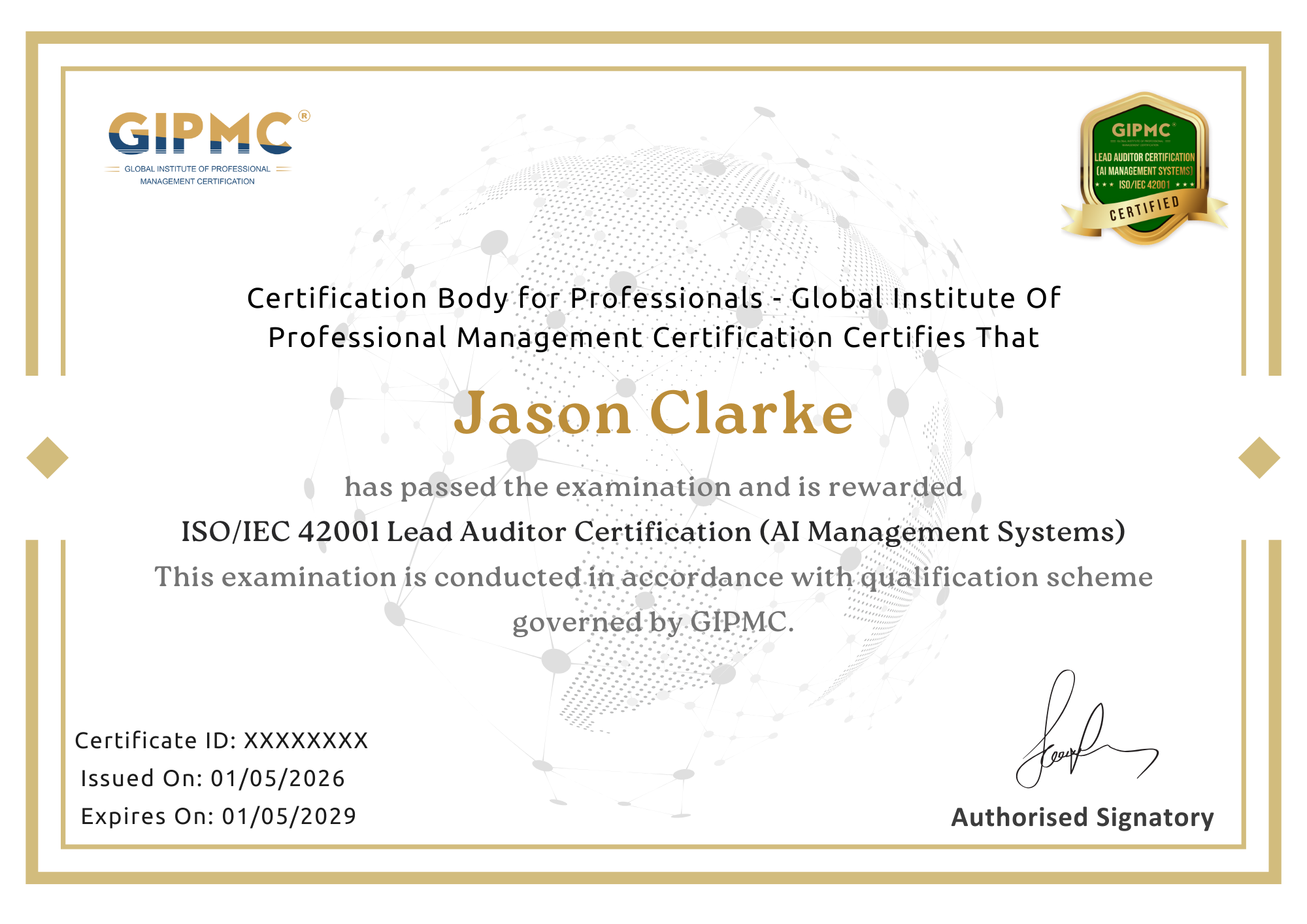
The ISO/IEC 42001 Lead Auditor Certification is valid for a defined period from the date of award, as specified by the certification body.
Renewal Purpose
- Maintain alignment with evolving analytical practices and data standards
- Reinforce statistical rigor and responsible analytics skills
- Protect the long-term professional credibility of the certification
Renewal is designed to:
- Maintain professional audit credibility in AI governance
- Ensure alignment with evolving AI technologies and regulations
- Protect the long-term value of the certification
Timely renewal allows professionals to retain active certification status without interruption.