Course Description
Deliver Compassionate, Safe, and Professional Patient Care
The Certified Nursing Associate Professional (CNAP) by GIPMC is a foundational-to-professional healthcare certification designed to develop and validate essential nursing support competencies required in clinical and care-based environments. This credential focuses on patient care fundamentals, safety practices, ethical conduct, and effective collaboration within healthcare teams.
CNAP prepares professionals to assist in delivering high-quality patient care across hospitals, clinics, long-term care facilities, and community health settings. The certification emphasizes practical skills, patient dignity, and adherence to healthcare standards while supporting registered nurses and healthcare practitioners.
Why Certified Nursing Associate Professional (CNAP) from GIPMC?
GIPMC’s CNAP certification is role-focused, globally adaptable, and practice-oriented, allowing professionals to apply nursing support skills across healthcare environments without being limited to specific national licensing frameworks.
Key Advantages
- Strong foundation in patient care and nursing support practices
- Emphasis on patient safety, hygiene, and ethical care
- Practical, scenario-based learning approach
- Applicable across hospitals, clinics, elder care, and home healthcare settings
- Career-oriented credential for nursing associates and healthcare support staff
CNAP supports workforce readiness in healthcare environments where quality care and patient safety are critical.
Market Relevance
- Growing global demand for trained nursing and healthcare support professionals
- Improved patient safety and care quality with certified support staff
- Increased employability in healthcare facilities and care services
- Strong career pathway into advanced nursing and healthcare roles
These trends reflect the importance of qualified nursing associates in strengthening healthcare delivery systems.
(Based on aggregated healthcare workforce and service demand trends.)
Who Should Pursue CNAP? (Target Audience)
The Certified Nursing Associate Professional (CNAP) certification is suitable for individuals involved in or aspiring to nursing support and patient care roles, including:
- Nursing Assistants and Associates
- Healthcare Support Staff
- Hospital and Clinical Care Assistants
- Long-Term and Elder Care Providers
- Home Healthcare Professionals
- Medical Facility Support Personnel
- Students seeking entry into healthcare careers
CNAP provides a structured and professional foundation for safe and compassionate patient care.
Detailed Learning Outcomes
By earning the Certified Nursing Associate Professional (CNAP), candidates demonstrate competencies consistent with a CAPM project management certification, including the ability to:
1. Foundations of Nursing Care
- Role of nursing associates in healthcare delivery
- Professional responsibilities and scope of practice
- Patient-centered care principles
2. Patient Safety & Infection Control
- Hygiene and sanitation practices
- Infection prevention and control measures
- Safe handling of equipment and materials
3. Basic Patient Care Skills
- Assisting with daily living activities
- Mobility, positioning, and comfort measures
- Observing and reporting patient conditions
4. Vital Signs & Basic Monitoring
- Measuring and recording vital signs
- Recognizing abnormal indicators
- Accurate documentation and reporting
5. Communication & Patient Interaction
- Effective communication with patients and families
- Cultural sensitivity and empathy
- Maintaining patient dignity and privacy
6. Ethics, Confidentiality & Professional Conduct
- Ethical responsibilities in healthcare
- Patient rights and confidentiality
- Professional behavior and accountability
7. Supporting Clinical Procedures
- Assisting nurses during procedures
- Preparing patients and care environments
- Post-procedure support and observation
8. Emergency Awareness & Response
- Identifying emergency situations
- Basic first response principles
- Escalation and reporting protocols
9. Documentation & Care Reporting
- Accurate care documentation
- Shift handover communication
- Following care plans and instructions
10. Teamwork & Healthcare Collaboration
- Working effectively with nurses and clinicians
- Understanding interdisciplinary care teams
- Supporting coordinated patient care
11. Elderly & Special Care Considerations
- Caring for elderly patients
- Supporting patients with special needs
- Compassionate long-term care practices
12. Professional Development & Workplace Readiness
- Continuous learning in healthcare settings
- Workplace safety and self-care
- Career growth pathways in nursing and healthcare
Professional and Career Benefits
CNAP-certified professionals are recognized for their ability to:
- Provide safe, respectful, and compassionate patient care
- Support nursing teams effectively
- Follow healthcare protocols and ethical standards
- Improve patient comfort and safety outcomes
- Contribute positively to healthcare service delivery
The certification supports career opportunities such as:
- Nursing Associate
- Healthcare Assistant
- Patient Care Technician
- Clinical Support Staff
- Long-Term Care Assistant
- Home Healthcare Professional
Certification Validity & Renewal
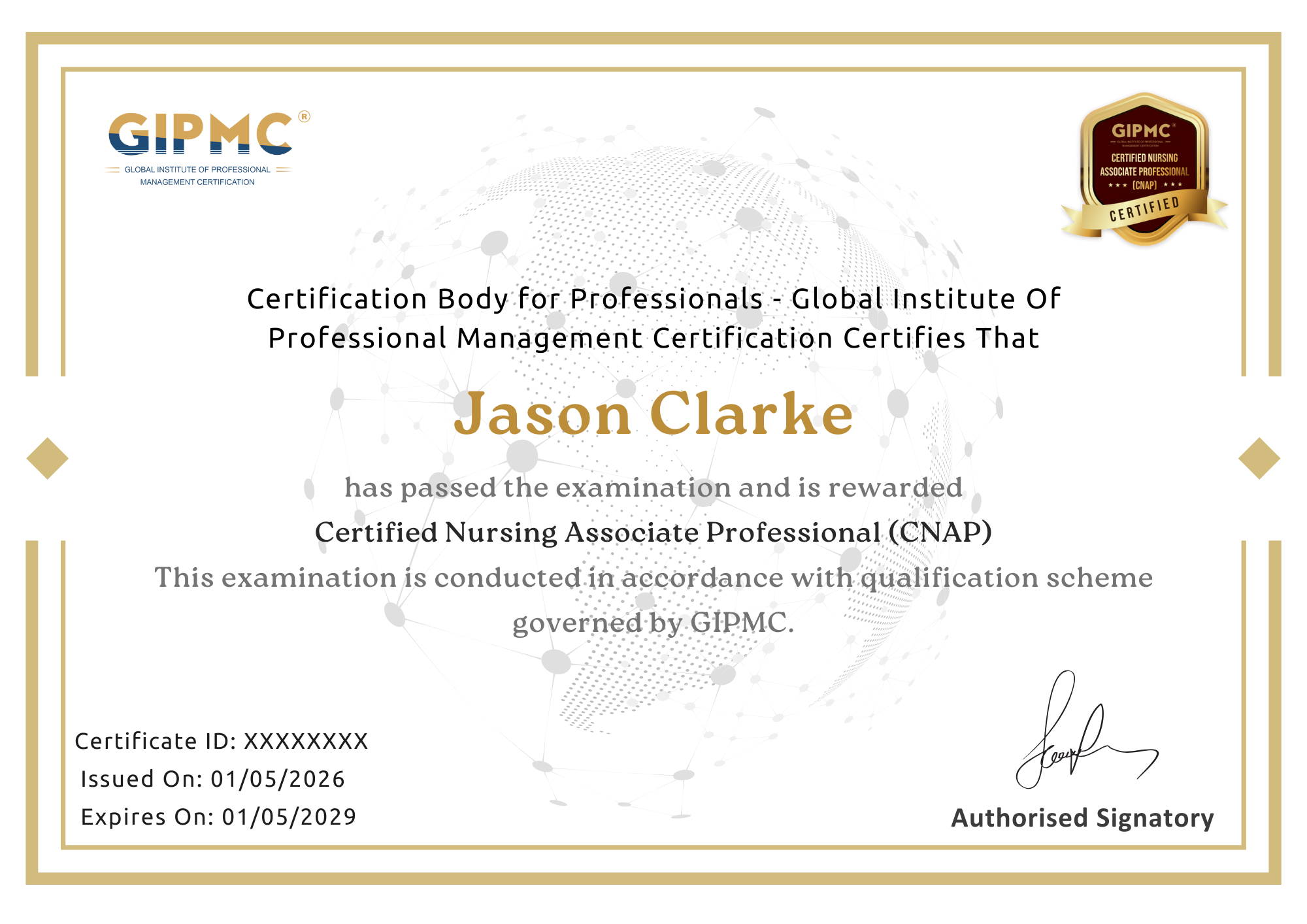
The Certified Nursing Associate Professional (CNAP) certification issued by GIPMC is valid for three (3) years from the date of certification award.
Renewal Objectives
- Maintain current patient care and safety knowledge
- Encourage ongoing professional development
- Preserve certification credibility and relevance
Renewal Process Includes:
- Completion of defined continuing education or skill refresh requirements
- Successful renewal assessment or verification, as applicable
- Submission of renewal application before certification expiry
Timely renewal allows professionals to retain active certification status without interruption.