Course Description
Leading Operational Excellence, Performance, and Execution Across the Enterprise
The Operations Management Leader (OML) certification is a professional leadership credential designed to develop, validate, and recognize capability in leading, managing, and optimizing organizational operations to achieve efficiency, reliability, and sustainable performance.
This certification prepares professionals to lead operations across production, service delivery, logistics, facilities, and support functions. It emphasizes operational strategy execution, performance management, people leadership, process optimization, risk management, and continuous improvement.
OML goes beyond functional operations knowledge by equipping professionals with the leadership mindset, execution discipline, and systems perspective required to align day-to-day operations with organizational goals and custome
Why Operations Management Leader (OML) from GIPMC?
Operations are the engine of organizational performance. OML is industry-agnostic, role-flexible, and execution-oriented, enabling leaders to apply operations management principles across manufacturing, services, healthcare, logistics, utilities, and public-sector environments.
Key Advantages
- Leadership-focused operations management credential
- Balanced coverage of strategy execution and daily operations
- Strong emphasis on performance, efficiency, and reliability
- Integrates people leadership with process and systems thinking
- Career-oriented certification with real-world applicability
OML is designed for professionals operating at the supervisory, managerial, and leadership levels of operations management.
Market Relevance
As organizations face cost pressure, efficiency demands, and customer expectations, skilled operations leaders are in high demand.
- 30–50% improvement in operational efficiency reported by organizations with structured operations leadership
- 65–85% hiring preference for managers with formal operations management credentials
- 25–40% reduction in operational costs and waste through disciplined operations management practices
- 2x higher consistency in service and delivery performance under trained operations leadership
(Based on aggregated global operations performance, management effectiveness, and workforce demand trends.)
These figures demonstrate why operations leadership capability is critical across industries.
Who Should Pursue Operations Management Leader (OML)? (Target Audience)
The Operations Management Leader (OML) certification is suitable for professionals responsible for managing or leading operational functions, including:
- Operations and Plant Managers
- Service Delivery and Operations Leaders
- Production, Facilities, and Maintenance Managers
- Logistics and Supply Chain Operations Managers
- Business Unit and Functional Managers
- Supervisors transitioning into operations leadership roles
- Professionals responsible for operational performance and execution
Across industries, OML provides a common leadership framework for effective operations management.
Detailed Learning Outcomes
By earning the Operations Management Leader (OML), candidates demonstrate competencies consistent with a CAPM project management certification, including the the ability to:
1. Foundations of Operations Management
- Role of operations in organizational success
- Core operations management principles
- Linking operations to business strategy
2. Operational Strategy and Execution
- Translating strategy into operational plans
- Aligning resources with objectives
- Managing execution discipline
3. Process Design and Optimization
- Designing efficient operational processes
- Eliminating waste and bottlenecks
- Supporting continuous improvement
4. Performance Management and KPIs
- Defining operational performance metrics
- Monitoring efficiency, quality, and delivery
- Using data to drive decisions
5. Capacity Planning and Resource Management
- Managing people, equipment, and materials
- Balancing demand and capacity
- Optimizing utilization
6. Quality Management in Operations
- Quality principles and assurance
- Preventing defects and service failures
- Building quality into operations
7. Risk Management and Operational Resilience
- Identifying operational risks
- Managing disruptions and variability
- Building resilient operations
8. Cost Control and Productivity Improvement
- Understanding operational cost drivers
- Improving productivity and efficiency
- Supporting profitability and sustainability
9. People Leadership in Operations
- Leading frontline and supervisory teams
- Workforce planning and engagement
- Building accountability and performance culture
10. Safety, Compliance, and Governance
- Operational safety management
- Compliance with policies and regulations
- Ethical and responsible operations leadership
11. Cross-Functional Coordination
- Working with supply chain, IT, quality, and finance
- Managing dependencies and handoffs
- Improving end-to-end flow
12. Continuous Improvement and Change Leadership
- Leading improvement initiatives
- Managing change in operational environments
- Sustaining performance gains
13. Professional Practice and Operations Leadership Maturity
- Decision-making and leadership presence
- Communication with stakeholders
- Preparing for senior operations roles
Professional and Career Benefits
Operations Management Leader (OML) certified professionals are recognized for their ability to:
- Lead operations with clarity, discipline, and accountability
- Improve efficiency, quality, and delivery performance
- Reduce operational risk and variability
- Align teams and processes with organizational goals
- Drive sustainable operational excellence
The certification supports career advancement into roles such as:
- Operations Manager or Senior Operations Manager
- Plant, Facility, or Service Delivery Manager
- Operations Director or Head of Operations
- Business Unit Operations Leader
- Operational Excellence or Transformation Leader
- Enterprise Operations Management Roles
Certification Validity & Renewal
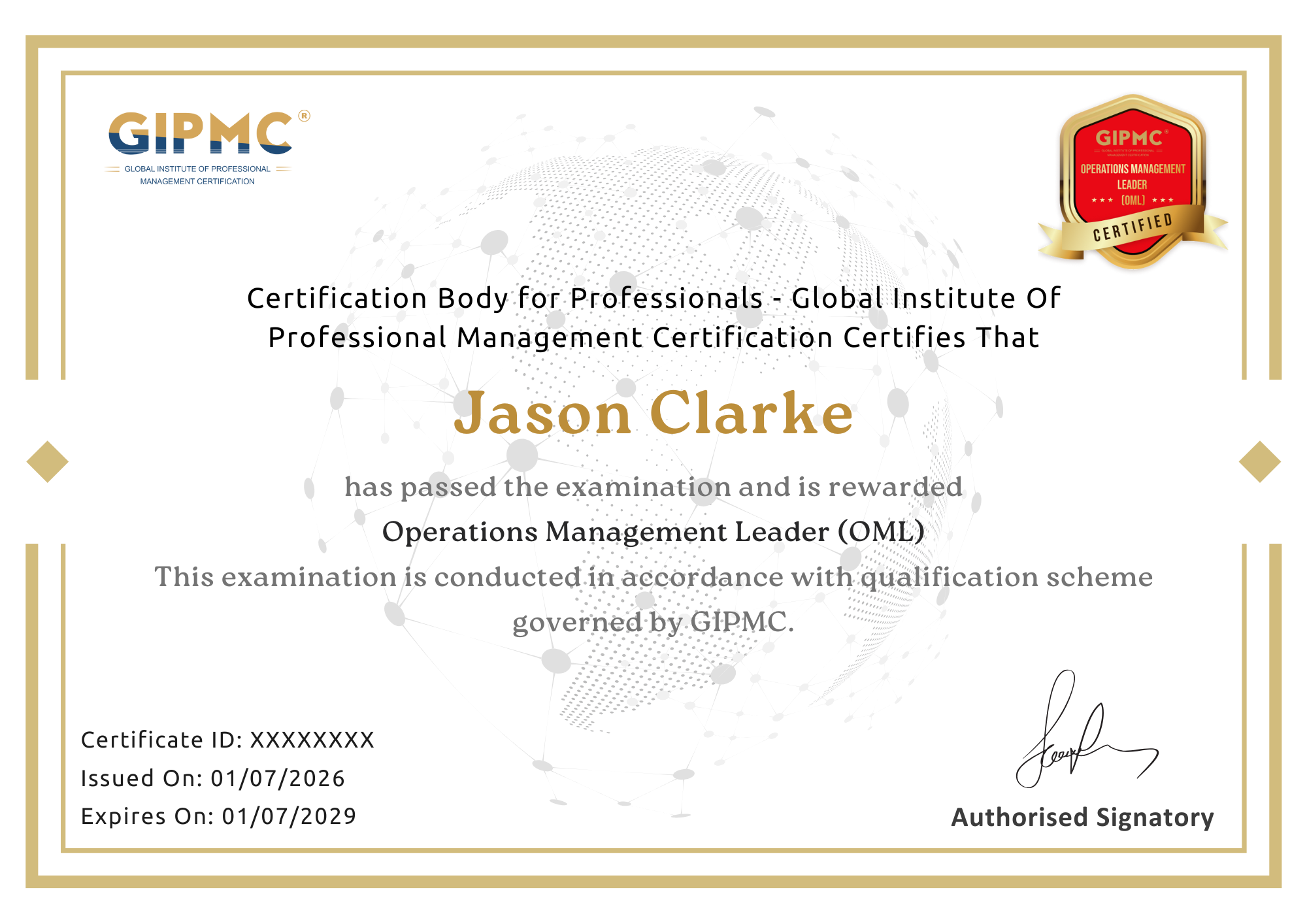
The Operations Management Leader (OML) certification is valid for three (3) years from the date of certification award.
Renewal is designed to:
- Maintain professional credibility
- Ensure continued alignment with evolving operations management practices
- Protect the long-term value of the certification
Renewal Process Includes:
- Completion of defined continuing professional development or knowledge refresh requirements
- Successful renewal assessment or verification, as applicable
- Submission of renewal application before certification expiry
Timely renewal allows professionals to retain active certification status without interruption.