Course Description
The Lean Master Black Strategist (LMBS) is an elite, executive-level professional certification designed to develop, validate, and recognize mastery in Lean strategy, enterprise transformation, and large-scale operational excellence leadership.
This certification prepares senior professionals to design, govern, and sustain organization-wide Lean strategies that align operational excellence with business vision, competitive advantage, and long-term value creation. It emphasizes strategic deployment, leadership alignment, portfolio-level improvement governance, and cultural transformation.
LMBS goes beyond advanced Lean practice by equipping professionals with the strategic authority, systems perspective, and executive influence required to embed Lean thinking into enterprise strategy, governance, and decision-making.
Why Lean Master Black Strategist (LMBS) from GIPMC?
Organizations pursuing sustained competitiveness require leaders who can connect Lean execution with corporate strategy and measurable business outcomes. LMBS is industry-agnostic, enterprise-focused, and leadership-driven, making it applicable across global organizations and complex operating models.
Key Advantages
- Highest-level Lean strategy and leadership credential
- Enterprise-wide and portfolio-level improvement focus
- Strong emphasis on strategy deployment and governance
- Integration of Lean with business, financial, and cultural outcomes
- Suitable for executive, advisory, and transformation leadership roles
LMBS is designed for professionals operating at the strategic and enterprise leadership level of continuous improvement.
Market Relevance
As organizations face global competition, cost pressure, and transformation demands, the need for Lean leaders with strategic authority continues to grow.
- 35–55% improvement in enterprise operational performance reported by organizations led by Lean master-level strategists
- 70–85% preference for senior transformation leaders with master-level Lean credentials
- 30–50% increase in sustainability of transformation outcomes through strategy-led Lean governance
- 2x higher success rate of enterprise transformation programs when guided by certified Lean master strategists
(Based on aggregated global operational excellence, enterprise transformation, and strategy execution trends.)
These figures highlight why Lean strategy leadership at the master level is critical for long-term organizational success.
Who Should Pursue Lean Master Black Strategist (LMBS)? (Target Audience)
The Lean Master Black Strategist (LMBS) certification is intended for senior professionals responsible for enterprise performance and transformation, including:
- Chief Transformation, Operations, or Excellence Officers
- Senior Operational Excellence and Lean Leaders
- Strategy, Performance, and Business Transformation Directors
- Enterprise Program and Portfolio Leaders
- Senior Consultants and Executive Advisors
- Governance and Continuous Improvement Heads
- Professionals shaping organization-wide improvement strategy
Across industries, LMBS provides a strategic framework for governing Lean at the enterprise level.
Detailed Learning Outcomes
By earning the Lean Master Black Strategist (LMBS), candidates demonstrate competencies consistent with a CAPM project management certification, including the the ability to:
1. Lean as an Enterprise Strategy
- Lean philosophy as a strategic management system
- Aligning Lean with organizational vision and purpose
- Creating long-term competitive advantage through Lean
2. Systems Thinking and Enterprise Optimization
- End-to-end systems thinking
- Optimizing value across complex organizations
- Managing interdependencies and constraints
3. Strategy Deployment and Policy Management
- Translating strategy into execution
- Deploying objectives across the enterprise
- Ensuring alignment and accountability
4. Governance of Operational Excellence
- Designing Lean governance structures
- Defining decision rights and oversight mechanisms
- Ensuring disciplined execution
5. Portfolio-Level Improvement Leadership
- Managing improvement portfolios
- Prioritizing initiatives based on value and risk
- Balancing short-term gains and long-term impact
6. Financial Impact and Value Realization
- Linking Lean initiatives to financial performance
- Measuring ROI and business value
- Ensuring transparency in benefits realization
7. Advanced Waste Elimination and Flow Strategy
- Systemic waste identification
- Flow optimization at scale
- Designing resilient and adaptive processes
8. Cultural Transformation and Leadership Alignment
- Building Lean leadership behaviors
- Aligning executives and managers
- Embedding continuous improvement culture
9. Change Leadership at Enterprise Scale
- Leading large-scale change programs
- Managing resistance and complexity
- Sustaining transformation momentum
10. Lean in Complex and Knowledge-Based Organizations
- Applying Lean beyond operations
- Improving service, digital, and knowledge work
- Adapting Lean to modern enterprises
11. Performance Management and Strategic Metrics
- Designing enterprise-level KPIs
- Monitoring strategic performance
- Using data for executive decision-making
12. Developing Lean Leadership Capability
- Coaching senior leaders and practitioners
- Building internal Lean capability
- Succession planning for excellence leadership
13. Sustaining Excellence and Continuous Renewal
- Preventing transformation fatigue
- Refreshing strategy and improvement focus
- Ensuring long-term organizational resilience
Professional and Career Benefits
Lean Master Black Strategist (LMBS) certified professionals are recognized for their ability to:
- Shape and govern enterprise-wide Lean strategy
- Lead complex, large-scale transformation initiatives
- Align operational excellence with business and financial outcomes
- Influence executive decision-making and governance
- Build sustainable cultures of continuous improvement
The certification supports advancement into roles such as:
- Lean Master Black Strategist
- Chief Transformation or Excellence Officer
- Enterprise Operational Excellence Director
- Business Transformation Executive
- Senior Lean and Strategy Consultant
- Executive Advisor on Performance Excellence
Certification Validity & Renewal
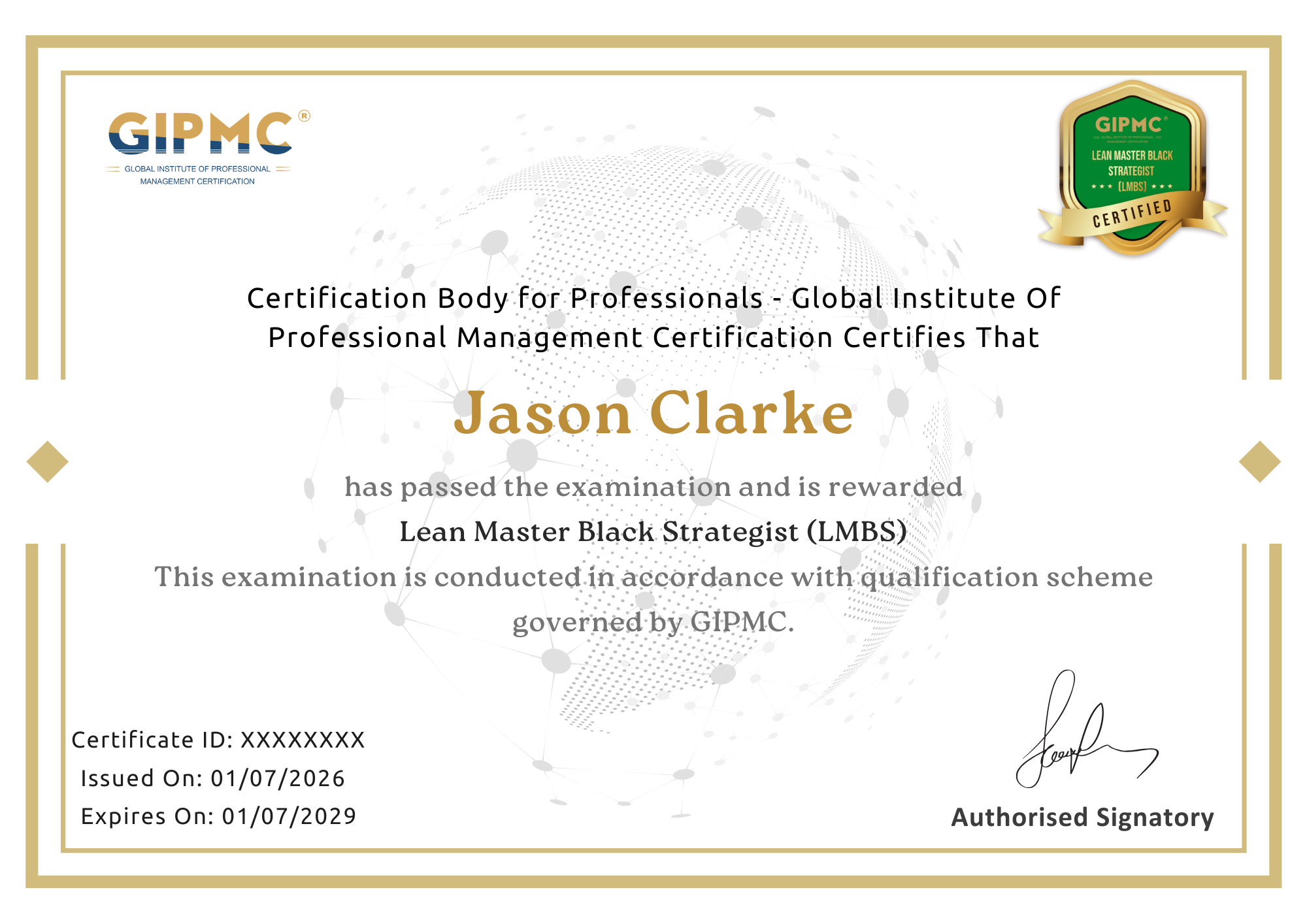
The Lean Master Black Strategist (LMBS) certification is valid for three (3) years from the date of certification award.
Renewal is designed to:
- Maintain professional credibility
- Ensure continued alignment with modern Lean and enterprise transformation practices
- Protect the long-term value of the certification
Renewal Process Includes:
- Completion of defined continuing professional development or knowledge refresh requirements
- Successful renewal assessment or verification, as applicable
- Submission of renewal application before certification expiry
Timely renewal allows professionals to retain active certification status without interruption.