Course Description
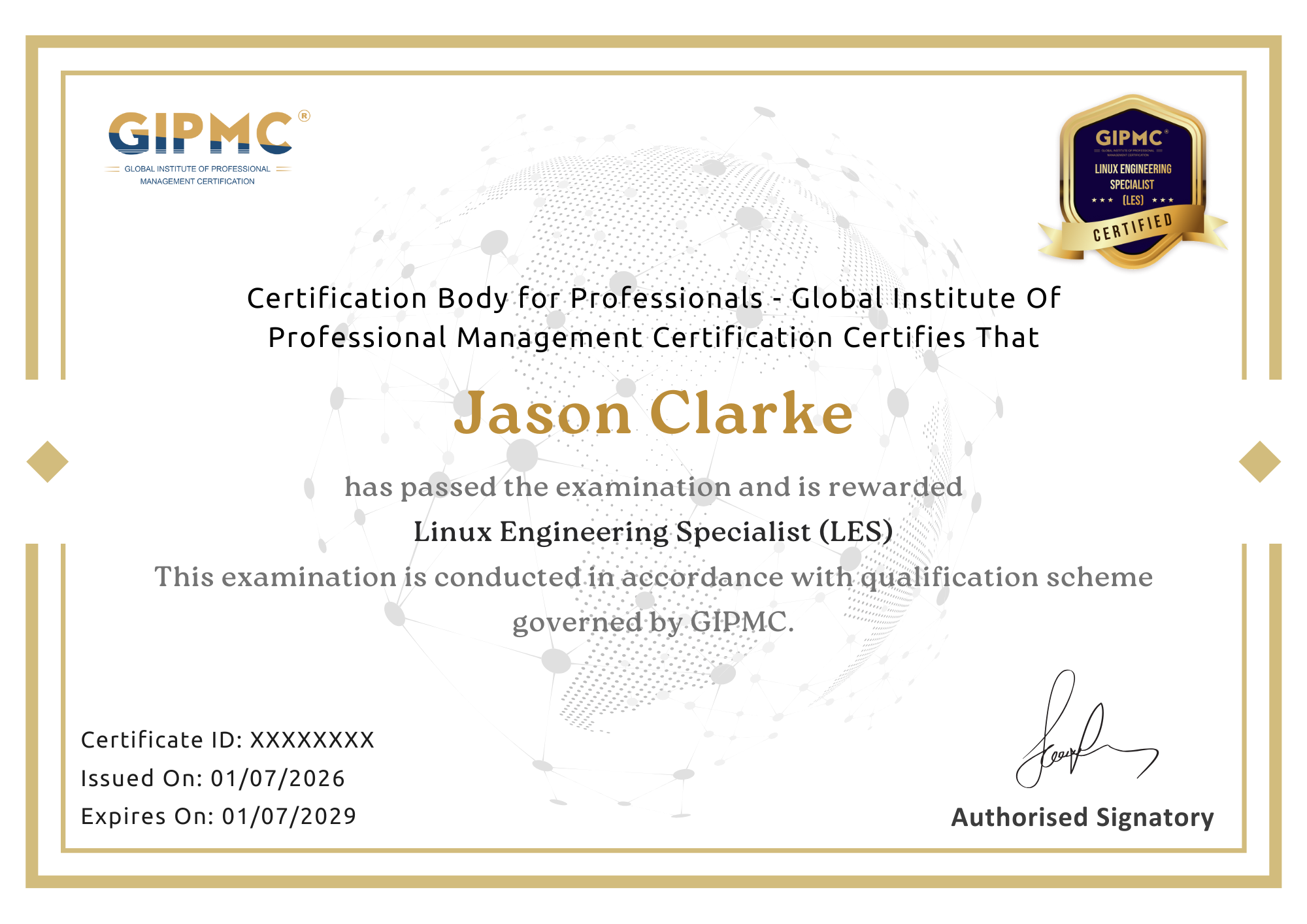
The Linux Engineering Specialist (LES) certification is an advanced professional credential designed to develop, validate, and recognize engineering-level expertise in designing, building, optimizing, and maintaining Linux-based systems and platforms in complex enterprise environments.
This certification prepares professionals to engineer Linux solutions that support high availability, scalability, performance, automation, and security across on-premises, cloud, and hybrid infrastructures. It emphasizes systems engineering, architectural thinking, automation, reliability, and performance optimization.
LES goes beyond administration by equipping professionals with the engineering depth and architectural mindset required to design resilient Linux platforms that support business-critical applications and services.
Why Linux Engineering Specialist (LES) from GIPMC?
Modern digital platforms, cloud services, and enterprise systems rely heavily on Linux engineered for scale, resilience, and performance. LES is vendor-neutral, distribution-agnostic, and engineering-focused, enabling professionals to apply skills across diverse Linux ecosystems.
Key Advantages
- Advanced, engineering-level Linux credential
- Vendor-neutral and distribution-independent
- Strong focus on architecture, scalability, and reliability
- Emphasis on automation, performance, and system optimization
- Applicable to enterprise, cloud, and mission-critical environments
LES is designed for professionals operating at the engineering and platform design level of Linux expertise.
Market Relevance
As organizations modernize infrastructure and scale digital platforms, demand for Linux engineers continues to grow globally.
- 70–90% of cloud and platform infrastructures rely on Linux-based operating systems
- 65–85% employer preference for infrastructure and platform engineers with advanced Linux engineering skills
- 40–60% improvement in system performance and availability reported by organizations with dedicated Linux engineering expertise
- 2x higher career mobility and compensation growth for professionals with engineering-level Linux credentials
(Based on aggregated global cloud infrastructure, platform engineering, and IT workforce trends.)
These figures highlight why Linux engineering capability is a critical and future-proof skill.
Who Should Pursue Linux Engineering Specialist (LES)? (Target Audience)
The Linux Engineering Specialist (LES) certification is suitable for professionals responsible for designing and engineering Linux platforms, including:
- Linux Engineers and Senior System Administrators
- Platform and Infrastructure Engineers
- Cloud and DevOps Engineers
- Site Reliability Engineering (SRE) Team Members
- Systems Architects and Technical Leads
- IT Infrastructure and Operations Engineers
- Professionals advancing from Linux administration to engineering roles
Across industries, LES provides a structured framework for enterprise Linux engineering.
Detailed Learning Outcomes
By earning the Linux Engineering Specialist (LES), candidates demonstrate competencies consistent with a CAPM project management certification, including the the ability to:
1. Linux Systems Architecture
- Linux system architecture and internals
- Kernel concepts and system components
- Designing Linux systems for enterprise use
2. Advanced Command-Line and System Control
- Advanced shell usage
- System-level control and tuning
- Managing complex operational tasks
3. Storage and File System Engineering
- Advanced file systems and storage design
- Logical volume management and RAID concepts
- Performance and resilience considerations
4. Network Engineering on Linux
- Advanced network configuration and tuning
- Routing, firewalling, and traffic control
- Diagnosing complex network issues
- Fundamentals of internet protocols
5. Performance Engineering and Optimization
- CPU, memory, disk, and network tuning
- Identifying bottlenecks and constraints
- Performance benchmarking and analysis
6. High Availability and Fault Tolerance
- Designing for redundancy and failover
- Load balancing and clustering concepts
- Minimizing downtime and service impact
7. Automation and Configuration Management
- Automation principles and tools
- Infrastructure as code concepts
- Consistency and repeatability in deployments
8. Security Engineering and Hardening
- Advanced system hardening techniques
- Secure configuration and access control
- Integrating security into system design
9. Virtualization and Container Platforms
- Engineering virtualized environments
- Container runtime and orchestration concepts
- Supporting modern application platforms
10. Monitoring, Observability, and Reliability
- Designing monitoring and alerting systems
- Logs, metrics, and traces
- Supporting reliability and resilience objectives
11. Incident Response and Root Cause Analysis
- Engineering response to system failures
- Advanced troubleshooting methodologies
- Preventing recurrence through design improvements
12. Change, Release, and Lifecycle Management
- Managing system changes safely
- Platform lifecycle planning
- Supporting continuous delivery environments
13. Engineering Leadership and Professional Practice
- Technical leadership and documentation
- Collaboration across engineering teams
- Preparing for architect and senior engineering roles
Professional and Career Benefits
Linux Engineering Specialist (LES) certified professionals are recognized for their ability to:
- Engineer scalable, reliable, and high-performance Linux systems
- Design platforms that support critical business workloads
- Automate and optimize infrastructure operations
- Reduce outages and improve system resilience
- Operate confidently in cloud-native and enterprise environments
The certification supports career advancement into roles such as:
- Linux Engineer or Senior Linux Engineer
- Platform or Infrastructure Engineer
- Cloud or DevOps Engineer
- Site Reliability Engineer (SRE)
- Systems Architect or Technical Lead
- Enterprise Infrastructure Specialist
Certification Validity & Renewal
Renewal is designed to:
- Maintain professional credibility
- Ensure continued alignment with evolving Linux technologies and engineering practices
- Protect the long-term value of the certification
Renewal Process Includes:
- Completion of defined continuing professional development or knowledge refresh requirements
- Successful renewal assessment or verification, as applicable
- Submission of renewal application before certification expiry
Timely renewal allows professionals to retain active certification status without interruption.