Course Description
Assure Ethical, Reliable & Compliant AI Systems Across the Enterprise
The Trustworthy AI Assurance Professional (TAIAP) certification is a professional credential designed to develop, validate, and recognize assurance-focused expertise for trustworthy, ethical, and compliant artificial intelligence systems.
This certification emphasizes AI assurance frameworks, risk validation, governance controls, ethical compliance, transparency verification, and lifecycle assurance, preparing professionals to ensure AI systems operate responsibly, reliably, and in alignment with regulatory and societal expectations.
TAIAP goes beyond AI development and policy. It equips professionals with the ability to independently assess, verify, and assure AI systems, providing confidence to organizations, regulators, customers, and stakeholders.
Why Trustworthy AI Assurance Professional (TAIAP) from GIPMC?
The TAIAP certification is framework-aware and technology-neutral, enabling professionals to apply AI assurance principles across different models, platforms, industries, and regulatory environments.
Key Advantages
- Globally relevant trustworthy AI assurance framework
- Balanced coverage of ethics, governance, risk, compliance, and technical assurance
- Scenario-driven learning aligned with real AI assurance and oversight needs
- Applicable across finance, healthcare, government, technology, manufacturing, and public sector AI use cases
- Career-oriented certification focused on independent assurance and accountability
TAIAP supports professionals operating at assurance, governance, and specialist oversight levels in AI-enabled organizations.
Market Relevance
As AI systems increasingly influence decisions and outcomes, organizations require formal assurance to demonstrate trustworthiness and compliance.
- 50–70% reduction in unmanaged AI risk through structured AI assurance practices
- 70%+ organizational preference for professionals trained in trustworthy AI assurance
- 45–60% improvement in regulatory and audit readiness for AI governance
- 2× higher stakeholder confidence in AI systems with independent assurance validation
(Based on aggregated AI governance maturity models, regulatory readiness studies, and enterprise risk benchmarks.)
These indicators highlight why trustworthy AI assurance is becoming a critical professional discipline.
Who Should Pursue TAIAP? (Target Audience)
The Trustworthy AI Assurance Professional certification is designed for professionals responsible for oversight, validation, and assurance of AI systems, including:
- AI Governance and Ethics Professionals
- Risk, Compliance, and Assurance Specialists
- Internal and External Auditors (AI Focus)
- Data Protection and Regulatory Compliance Leaders
- AI Risk and Trust Officers
- Quality, Assurance, and Control Professionals
- Consultants advising on AI governance and trust
TAIAP establishes a common assurance language for trustworthy AI across organizations.
Detailed Learning Outcomes
By earning the Trustworthy AI Assurance Professional (TAIAP), candidates demonstrate competencies consistent with a CAPM project management certification, including the the ability to:
1. Foundations of Trustworthy AI Assurance
- What makes AI trustworthy
- Role of assurance in AI governance
- Assurance vs. development and policy roles
2. AI Systems, Models & Lifecycle Overview
- AI system components and workflows
- Model development, deployment, and monitoring
- Assurance touchpoints across the lifecycle
3. Trustworthy AI Principles & Criteria
- Fairness, accountability, transparency, and reliability
- Translating principles into assurance criteria
- Evidence-based trust validation
4. AI Governance Structures & Oversight
- Evaluating AI governance frameworks
- Roles, responsibilities, and accountability
- Decision rights and escalation
5. Risk Identification & Trust Impact Assessment
- Ethical, operational, and societal AI risks
- Impact assessment methodologies
- Risk prioritization for assurance
6. Data Governance & Quality Assurance
- Data sourcing, consent, and lineage validation
- Bias, representativeness, and quality checks
- Data lifecycle assurance
7. Fairness, Bias & Outcome Validation
- Assessing bias and discriminatory impact
- Fairness testing approaches
- Documenting and reporting findings
8. Transparency & Explainability Assurance
- Verifying explainability mechanisms
- User-facing transparency validation
- Communicating AI decisions responsibly
9. Security, Robustness & Reliability Assurance
- Model robustness and resilience checks
- Security and misuse risk awareness
- Failure and stress scenario validation
10. Regulatory & Standards Alignment
- Mapping AI systems to applicable regulations
- Standards and guideline alignment
- Preparing assurance evidence for regulators
11. Assurance Evidence, Reporting & Communication
- Collecting and validating assurance evidence
- Structuring AI assurance reports
- Communicating trust findings to stakeholders
12. Ethics, Independence & Professional Judgment
- Ethical responsibilities of AI assurance professionals
- Maintaining independence and objectivity
- Handling conflicts and escalation
13. Trustworthy AI Assurance Capstone & Review
- End-to-end AI assurance scenario
- Trust gaps, recommendations, and reporting
- Final professional readiness assessment
Professional and Career Benefits
TAIAP certified professionals are recognized for their ability to:
- Independently assure AI systems for trustworthiness and compliance
- Identify and mitigate ethical, regulatory, and operational AI risks
- Provide confidence to leadership, regulators, and stakeholders
- Support responsible and transparent AI adoption
- Strengthen organizational AI governance and trust
Career roles supported by TAIAP include:
- Trustworthy AI Assurance Professional
- AI Governance & Assurance Specialist
- Responsible AI Risk & Compliance Lead
- AI Audit and Trust Officer
- AI Ethics & Assurance Consultant
- Regulatory and Oversight Advisor
Certification Validity & Renewal
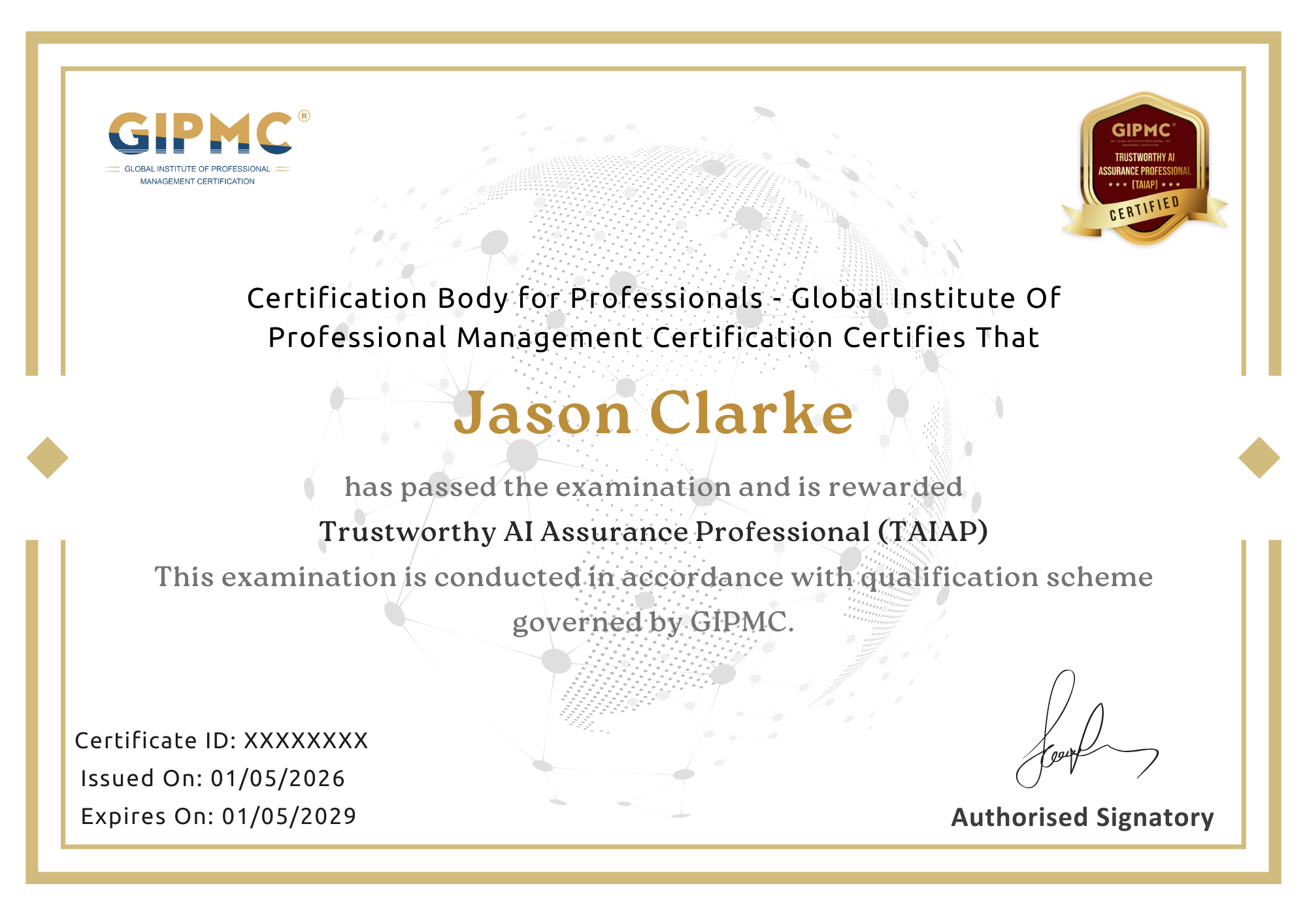
The Trustworthy AI Assurance Professional (TAIAP) certification is valid for three (3) years from the date of certification award.
Renewal Purpose
- Maintain alignment with evolving AI regulations, standards, and assurance practices
- Reinforce independence, ethics, and trust validation competencies
- Protect the long-term professional credibility of the certification
Renewal Process Includes
- Completion of defined professional development or AI assurance knowledge refresh activities
- Successful renewal assessment or verification, as applicable
- Submission of renewal application prior to certification expiry
Timely renewal allows professionals to retain active certification status without interruption.