Course Description
Identify Security Weaknesses, Validate Controls & Protect Applications
The Secure Software Testing Specialist (SSTS) certification is a professional credential designed to develop, validate, and recognize specialized skills in security-focused software testing.
This certification emphasizes security test design, vulnerability discovery, secure test execution, risk-based validation, and collaboration with development and security teams, preparing professionals to uncover weaknesses before attackers do.
SSTS bridges the gap between traditional software testing and application security. It equips specialists with the ability to test software not only for functionality, but for resilience against misuse, abuse, and exploitation.
Why Secure Software Testing Specialist (SSTS) from GIPMC?
The SSTS certification is tool-agnostic and methodology-flexible, enabling professionals to apply secure testing practices across different development models, technologies, and security programs.
Key Advantages
- Globally relevant secure software testing framework
- Balanced coverage of functional testing with security-focused validation
- Practical, scenario-driven learning aligned with real attack patterns
- Applicable across web, mobile, cloud, API, and enterprise applications
- Career-oriented certification focused on prevention and risk reduction
SSTS supports professionals operating at specialist and senior testing roles within secure development environments.
Market Relevance
As application-layer attacks continue to grow, organizations increasingly rely on security-aware testers to identify vulnerabilities early.
- 45–65% increase in vulnerability detection before production release
- 70%+ hiring preference for testers with security testing expertise
- 50% reduction in post-release security defects through secure testing practices
- 2× faster remediation cycles when security testing is integrated into QA
(Based on aggregated application security testing, DevSecOps, and software quality benchmarks.)
These indicators highlight why secure software testing is a critical capability in modern development teams.
Who Should Pursue SSTS? (Target Audience)
The Secure Software Testing Specialist certification is designed for professionals involved in testing, validation, and quality assurance of secure systems, including:
- Software Testers and QA Engineers
- Security Testing and AppSec Team Members
- Automation Test Engineers with security responsibilities
- DevSecOps and Secure SDLC Practitioners
- Application Security Analysts (Entry–Intermediate)
- QA Leads and Test Managers
- Professionals transitioning from QA into security roles
SSTS establishes a shared security-testing language across QA, development, and security teams.
Detailed Learning Outcomes
By earning the Secure Software Testing Specialist (SSTS), candidates demonstrate competencies consistent with a CAPM project management certification, including the ability to:
1. Foundations of Secure Software Testing
- Role of testing in application security
- Difference between functional and security testing
- Tester responsibilities in secure SDLC
2. Secure Development Lifecycle & Testing Integration
- Where security testing fits in SDLC
- Shift-left and shift-right security testing
- Collaboration with developers and security teams
3. Application Threat Awareness for Testers
- Common application threats and attacker mindset
- Abuse cases and misuse scenarios
- Risk-focused testing perspectives
4. Security Test Planning & Strategy
- Risk-based security test planning
- Defining scope, objectives, and priorities
- Aligning tests with threat models
5. Secure Test Design Techniques
- Designing negative and abuse test cases
- Boundary, fuzz, and edge-case testing
- Mapping tests to security risks
6. Input Validation & Injection Testing
- Testing for injection flaws
- Input handling and validation checks
- Identifying unsafe data processing
7. Authentication & Authorization Testing
- Testing identity, access, and session controls
- Privilege escalation and access bypass checks
- Verifying role-based controls
8. API & Integration Security Testing
- Testing APIs and service integrations
- Authorization, rate limiting, and data exposure
- Handling third-party dependencies
9. Automated Security Testing Awareness
- Role of automation in security testing
- Integrating security tests into pipelines
- Strengths and limitations of automated tools
10. Vulnerability Identification & Reporting
- Classifying and validating findings
- Writing effective security defect reports
- Communicating risk and impact
11. Retesting, Regression & Verification
- Verifying fixes and patches
- Preventing reintroduction of vulnerabilities
- Secure regression testing practices
12. Ethics, Compliance & Responsible Testing
- Ethical responsibilities of security testers
- Safe testing practices
- Compliance and documentation awareness
13. Secure Software Testing Capstone & Review
- End-to-end secure testing scenario
- Risk findings and improvement recommendations
- Final specialist readiness assessment
Professional and Career Benefits
SSTS-certified professionals are recognized for their ability to:
- Identify security weaknesses during testing phases
- Design and execute security-focused test cases
- Collaborate effectively with AppSec and development teams
- Reduce security risk before software release
- Strengthen organizational secure development practices
Career roles supported by SSTS include:
- Secure Software Testing Specialist
- Security-Focused QA Engineer
- Application Security Tester
- DevSecOps Testing Practitioner
- QA Security Analyst
- Secure Testing Lead (Entry–Mid Level)
Certification Validity & Renewal
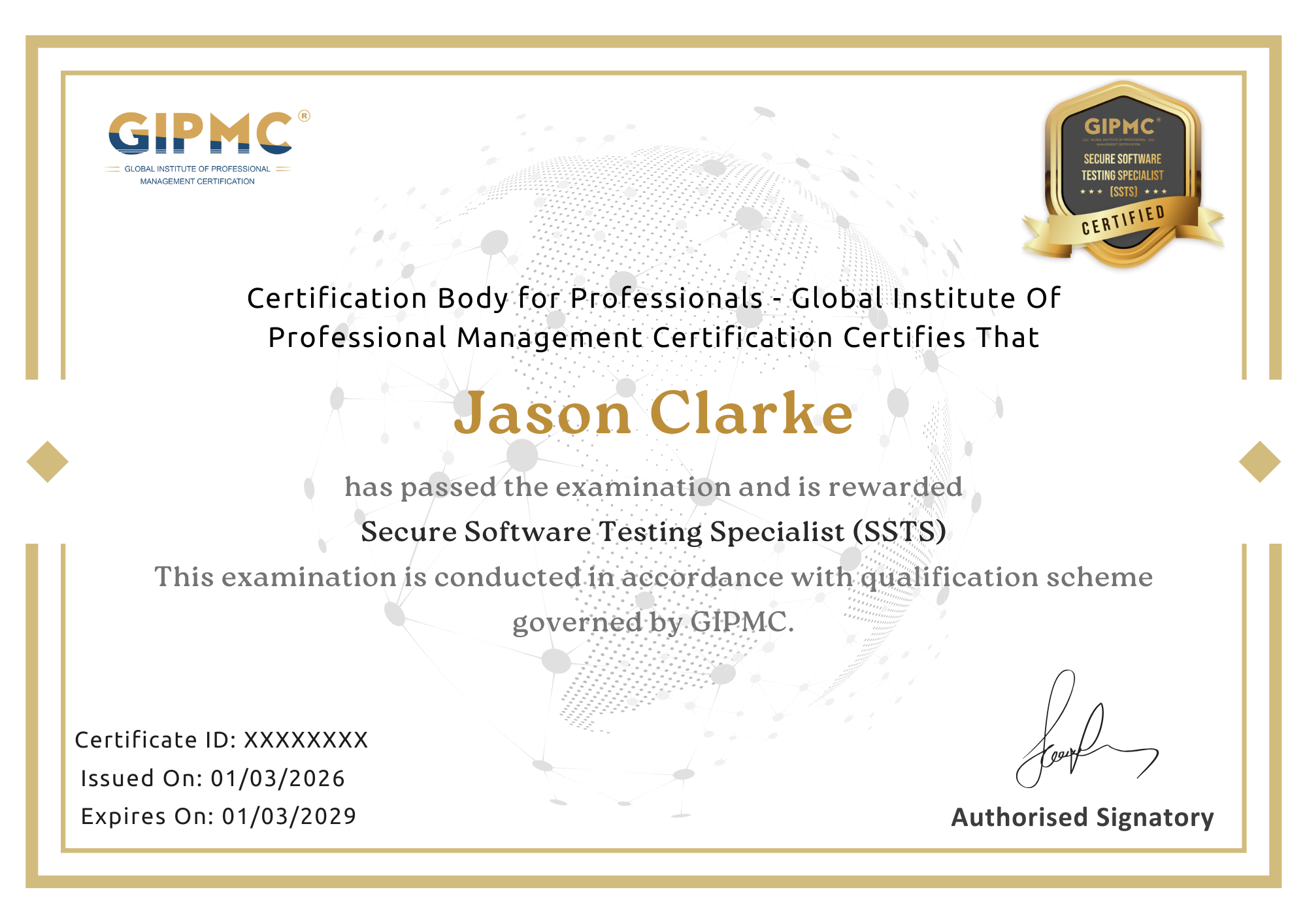
The Secure Software Testing Specialist (SSTS) certification is valid for three (3) years from the date of certification award.
Renewal Purpose
- Maintain alignment with evolving application threats and testing techniques
- Reinforce ethical, responsible, and risk-based security testing practices
- Protect the long-term professional credibility of the certification
Renewal Process Includes
- Completion of defined professional development or secure testing knowledge refresh activities
- Successful renewal assessment or verification, as applicable
- Submission of renewal application prior to certification expiry
Timely renewal allows professionals to retain active certification status without interruption.