Course Description
Develop Practical Management Skills for Effective Business Leadership
The Business Management Professional Certificate (BMPC) by GIPMC is a professional credential designed to develop, validate, and recognize core business management capabilities required to operate, manage, and grow organizations effectively.
This certification focuses on management fundamentals, operational planning, people leadership, decision-making, financial awareness, and organizational execution, preparing professionals to manage teams, processes, and resources in diverse business environments.
BMPC bridges theory and practice. It equips professionals to apply structured management principles, improve performance, support strategic objectives, and contribute to sustainable business success.
Why Business Management Professional Certificate (BMPC) from GIPMC?
Effective management is the backbone of organizational success. BMPC is a practical, industry-agnostic management credential designed to equip professionals with the core capabilities required to manage people, processes, and resources effectively across diverse business environments.
Key Advantages
- Comprehensive business management credential focused on real-world application
- Strong foundation in management fundamentals and operational execution
- Emphasis on people leadership, decision-making, and financial awareness
- Bridges management theory with practical, structured implementation
- Career-oriented certification supporting sustainable business performance
BMPC is designed for professionals operating at supervisory, managerial, and emerging leadership levels who seek to strengthen their management effectiveness and organizational impact.
Market Relevance
- 65%+ employers seek professionals with proven management capability
- 55% improvement in team performance with structured management practices
- 2× higher execution success with clear management processes
- 40% reduction in operational inefficiencies through effective management
(Based on aggregated workforce, leadership, and operational performance trends.)
These indicators show why strong business management skills are essential across roles and industries.
Who Should Pursue BMPC?
The Business Management Professional Certificate (BMPC) is suitable for professionals responsible for managing people, processes, or business functions, including:
- Team Leaders and Supervisors
- Functional and Operations Managers
- Project and Program Professionals
- Business Analysts and Coordinators
- Entrepreneurs and Small Business Owners
- Professionals transitioning into management roles
- Early- and mid-career managers
BMPC is ideal for those who want practical, transferable management skills.
Detailed Learning Outcomes
By earning the Business Management Professional Certificate (BMPC), candidates demonstrate competencies consistent with a CAPM project management certification, including the ability to:
1. Foundations of Business Management
2. Organizational Structure & Operations
- Understanding organizational models
- Roles, responsibilities, and workflows
- Managing operational alignment
3. Planning & Goal Setting
- Setting objectives and priorities
- Short-term and long-term planning
- Performance alignment
4. Decision-Making & Problem Solving
- Structured decision-making approaches
- Analytical and critical thinking
- Managing uncertainty
5. People Management & Team Leadership
- Building and leading effective teams
- Motivation and performance management
- Communication and feedback
6. Financial & Business Awareness
- Understanding budgets and costs
- Basic financial statements
- Managing resources responsibly
7. Process Improvement & Efficiency
- Identifying inefficiencies
- Continuous improvement concepts
- Managing change
8. Communication & Stakeholder Management
- Effective business communication
- Managing internal and external stakeholders
- Conflict resolution
9. Risk Awareness & Business Control
- Identifying business risks
- Basic control and mitigation strategies
- Escalation and accountability
10. Customer & Value Focus
- Understanding customer needs
- Delivering value consistently
- Service and quality orientation
11. Ethics, Governance & Professional Conduct
- Ethical decision-making
- Governance and compliance awareness
- Responsible management practices
12. Performance Measurement & Improvement
- Defining and tracking performance metrics
- Using data for management decisions
- Continuous improvement
13. Developing as a Business Manager
- Self-assessment and skill development
- Career pathways in management
- Lifelong learning mindset
Professional and Career Benefits
BMPC certified professionals are recognized for their ability to:
- Apply structured management practices confidently
- Lead teams and manage operations effectively
- Improve productivity and business outcomes
- Communicate clearly with stakeholders
- Build a strong foundation for leadership growth
BMPC supports progression into roles such as:
- Business Manager
- Operations or Functional Manager
- Team Leader or Supervisor
- Project or Program Manager
- Business Operations Analyst
- Entrepreneur or Business Owner
Certification Validity & Renewal
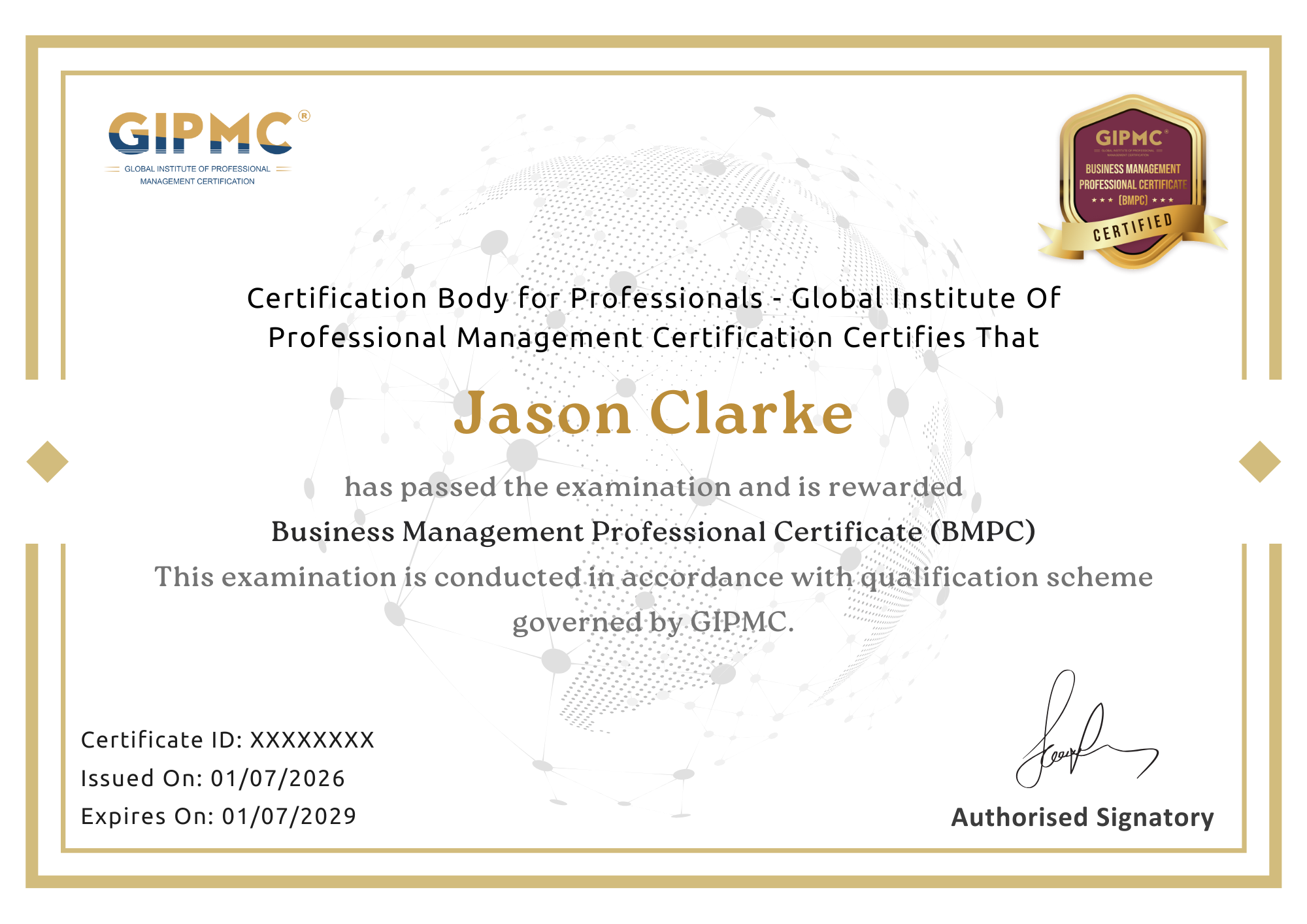
The Business Management Professional Certificate (BMPC) is valid for three (3) years from the date of award.
Renewal Purpose
- Maintain alignment with evolving management practices
- Ensure continued professional relevance
- Protect the long-term value of the certification
Renewal Process Includes
- Completion of continuing professional development or management knowledge refresh
- Renewal assessment or professional verification, as applicable
- Submission of renewal application before certification expiry
Timely renewal allows professionals to retain active certification status without interruption.